
For an outdoor security camera in Canada, look for IP66 or IP67 (dust-tight and protected from jets or brief immersion in water), IK10 if vandalism is a risk (the highest impact rating, 20 joules), and an operating temperature range that covers your coldest nights, which on the Prairies can fall to -30 °C or lower. Check the datasheet for the temperature limit, because it is separate from the IP and IK ratings. Cold also shortens battery life, fogs lenses and ices infrared windows, which is why many winter installations use wired PoE cameras with built-in heaters.
PCBy the Pixl Canada install team. Updated October 26, 2026. 7 min read.
- IP and IK ratings decoded
- Operating temperature and batteries in the cold
- Fog, ice and condensation fixes
- A checklist for outdoor cameras
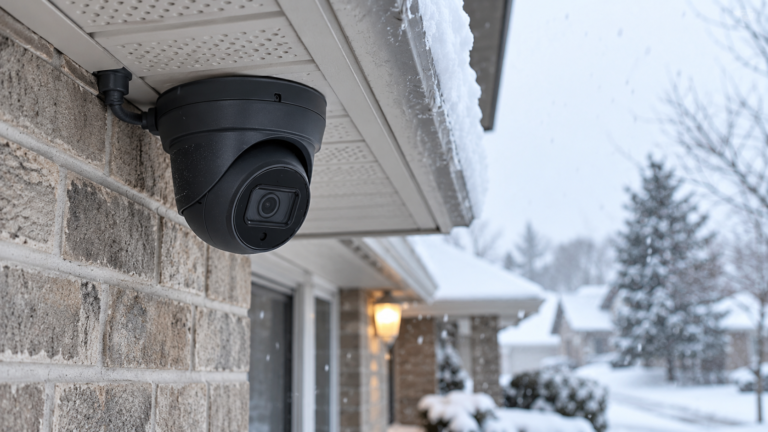
- IP is about dust and water. IK is about impact. Neither tells you the cold limit.
- IP66 or IP67 is the normal target for an outdoor camera.
- IK10 matters where cameras can be reached and hit.
- Check the operating temperature range on the datasheet and choose heated or wired cameras for deep cold.
What does an IP rating mean on a security camera?
The IP code comes from IEC 60529. The first digit rates protection against solids and dust, and the second against water.
| Rating | Dust | Water | Suits |
|---|---|---|---|
| IP54 | Limited ingress | Splashing water | Sheltered spots only |
| IP66 | Dust-tight | Powerful water jets from any direction | Most outdoor cameras |
| IP67 | Dust-tight | Temporary immersion | Exposed spots with standing water risk |
| IP68 | Dust-tight | Continuous immersion, set by the maker | Special cases |
What does an IK rating mean?
The IK code (IEC 62262) rates resistance to mechanical impact. IK10, the highest level, withstands a 20-joule impact. Look for IK10 where a camera can be reached from the ground, such as parking lots, building entrances and public-facing walls.
| Location | Need IK10? |
|---|---|
| Reachable from the ground | Yes |
| High on a wall or pole | Often not essential |
| Inside a public area | Yes, or use a dome with a vandal-resistant housing |
How does Canadian cold affect a security camera?
| Camera type | Effect of deep cold | What to do |
|---|---|---|
| Battery-powered | Battery capacity drops and some batteries stop charging or working below their rated limit | Check the cold limit on the datasheet. Use wired power for deep cold. See PoE vs WiFi for winters |
| Wired PoE | Electronics have a rated temperature range. Lens windows can fog or ice | Choose a model rated for your coldest nights, ideally with a heater |
| Solar | Short winter days give less charge and the battery is cold | See solar and 4G cameras |
| Indoor camera outside | Not rated for weather or cold | Do not use outdoors |
Read the operating temperature on the datasheet as a range (for example, from -30 °C to +60 °C). Pick a camera whose low limit is comfortably below your coldest expected night.
How do you prevent fog, ice and condensation?
| Problem | Cause | Fix |
|---|---|---|
| Foggy lens | Warm moist air inside meeting a cold lens | Camera with a sealed, desiccated housing, or a built-in heater |
| Ice on the front window | Freezing rain or snow | Mount under an eave and use a heated model |
| Infrared glare at night | Snow or flakes reflect the infrared light | Move the camera or lower the IR power. See night vision cameras |
| Spiders and insects in warm months | Attracted to infrared light | Regular cleaning and a sunshade |
Outdoor camera checklist for Canada
| Spec | Target |
|---|---|
| Ingress protection | IP66 or IP67 |
| Impact protection | IK10 where reachable |
| Operating temperature | Low limit well below your coldest night |
| Heater | Preferred for deep cold, and counted in the PoE budget. See PoE sizing |
| Cable | Outdoor-rated. See the cable guide |
| Mounting | Under an eave or with a sunshade, away from drip lines |
Camera weather ratings: frequently asked questions
What IP rating should an outdoor security camera have?
IP66 or IP67 is the normal target for outdoor use.
What does IK10 mean?
The highest impact rating. It withstands a 20-joule impact and is useful where a camera can be reached.
Do security cameras work in -30 °C?
Only if the datasheet’s operating range covers it. Battery cameras are the most affected. Wired PoE cameras with heaters are the safer choice.
Why does my camera fog up in winter?
Moist air inside the housing meets a cold lens. A sealed housing or a built-in heater prevents it.
Is IP67 better than IP66?
They protect against different water conditions. IP66 handles powerful jets, IP67 temporary immersion. Both are dust-tight. A dual rating covers both.
Does Pixl install cold-rated cameras?
Yes. We install any brand you bought and can suggest models for Canadian winters in a free written quote for wired CCTV. You pay after the job.
Get outdoor cameras built for Canadian winters
Send photos of the spots. Free written quote for wired CCTV. You pay after the job.
Types of CCTV cameras
Night vision cameras
Where to place cameras
Outdoor security cameras compared for Canadian winters
Sources and method. IP codes follow IEC 60529 and IK codes IEC 62262, as summarized in public explainers. Temperature limits and battery behaviour vary by model, so use the manufacturer’s datasheet. Cold-snap examples are general.
About Pixl Canada. Pixl Canada is an installation company based in Edmonton, Alberta, serving cities across Canada with TV mounting, security cameras, appliance installation and smart home setup. Call or text (587) 899-7495. Open Monday to Saturday 8am to 8pm and Sunday 9am to 7pm.