
How to hide TV wires without breaking Canadian electrical code
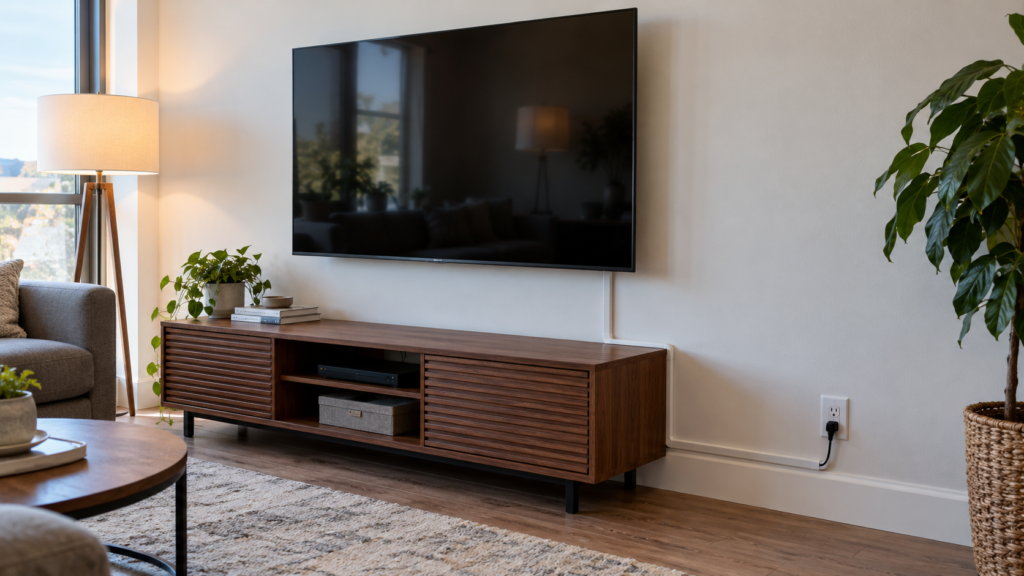
There are exactly two legal ways to hide TV wires in a Canadian home, and one illegal shortcut that a lot of DIY guides still recommend without mentioning it violates the electrical code. This is the practical how-to — both legal methods, what each one costs, and how to tell which one fits your situation.
The one method that's actually illegal
Dropping the TV’s standard power cord into the wall cavity to hide it is the shortcut a lot of people try, and it’s against the Canadian Electrical Code everywhere in the country. Flexible cords aren’t built with the fire-rated jacketing required for permanent in-wall use, and an insurer may question a fire claim tied to the violation. We cover the legal detail in full in our guide on TV wall mounting in Canada. Here, the focus is what to do instead.
Method 1: in-wall rated power kit
An in-wall rated power kit is a small recessed outlet installed directly behind where the TV hangs, wired properly into your home’s electrical system by a licensed electrician. The TV plugs into it directly — nothing runs through the wall cavity itself except permanent, code-rated house wiring.
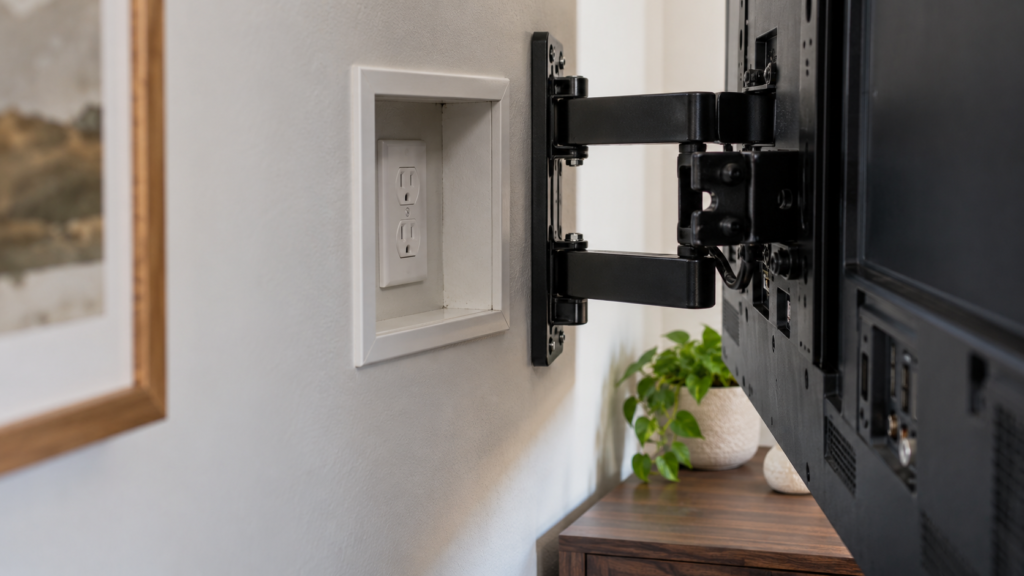
This is the fully invisible option: no cord in sight anywhere, front or back. It typically adds $80–$150 to a mounting job, and because it involves house wiring, it needs an electrician rather than being a pure DIY task.
Method 2: cable raceway
A cable raceway is a slim channel, usually paintable to match the wall, that runs the visible cord from the TV down to an existing outlet. It doesn’t touch the wall cavity or house wiring at all, which means no electrician is required and no code issue exists — the cord is simply covered, not concealed inside a wall.
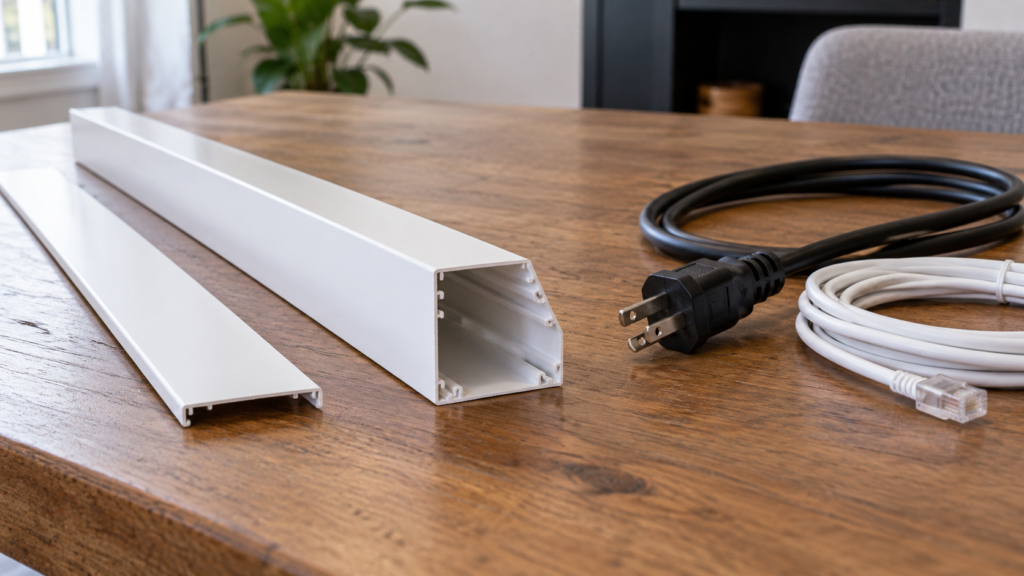
Raceway kits run $15–$40 for the materials and are genuinely DIY-friendly: cut to length, stick to the wall, tuck the cord inside, paint if you want it to disappear visually. It’s the practical choice for renters, since it’s fully removable and leaves no permanent mark.
What about HDMI and other cables?
Worth clarifying, since it trips people up: the electrical code restriction is specifically about the TV’s power cord — the flexible cable carrying 120V household current. Low-voltage signal cables like HDMI, and proprietary bundled cables like Samsung’s One Connect, don’t carry the same restriction and can generally be run through a wall cavity using standard low-voltage fittings. The line is drawn at power, not signal.
Which method should you choose?
If the budget allows and you want a truly invisible finish — especially on a feature wall where the cord would be the one thing breaking the look — the in-wall power kit is worth the electrician cost. If you’re renting, working with a tighter budget, or simply don’t need a completely invisible result, a raceway gets you 90% of the visual benefit for a fraction of the price and zero permanence.
Want your TV mounted with the cord fully hidden, done legally?
Frequently asked questions
Only for the in-wall power kit method, since it involves house wiring. A cable raceway needs no electrician at all.
Close, especially painted to match the wall — but it’s not invisible the way an in-wall power kit is. It’s the tradeoff for a cheaper, DIY-friendly, fully reversible option.
Generally yes — HDMI and other low-voltage signal cables aren’t subject to the same electrical code restriction as power cords.
Typically $80–$150 on top of the mounting cost itself, since it requires an electrician.
No — a raceway is surface-mounted and fully removable, unlike drilling into the wall.