
The ultimate Canadian guide to TV wall mounting (2026 edition)
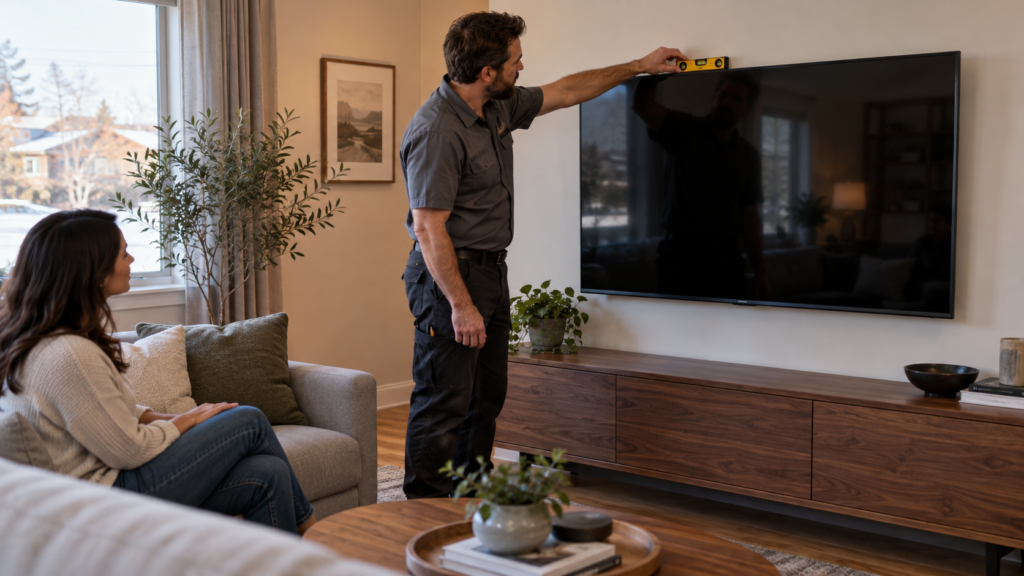
This is the only TV mounting guide you need for a Canadian home. Whether you’re in a century-old character home in Edmonton, a concrete high-rise in Toronto, or a rental in Vancouver, the fundamentals are the same: wall type, electrical code, and the right hardware are what separate a mount that lasts from one that doesn’t. We cover the full picture below, and link out to a deep dive on every specific scenario as we publish them.
Why TV mounting isn't one-size-fits-all in Canada
The lifestyle TV has changed what “mounting a TV” means. The Samsung Frame and similar art-mode displays turned the television into a piece of furniture, and that shifted demand toward flush, “zero-gap” installs that older bracket hardware was never designed for. A decade ago, most mounting jobs were about getting a bulky panel off a stand and onto a wall; today a growing share of the work is about making a 65-inch screen disappear into the room when it’s off.
It also split the market. National chains bundle mounting into annual memberships that run well past a hundred dollars a year before you’ve paid for the actual labour. Independent installers tend to work flat-rate per job — often the better deal for a single mount, especially once you factor in diagnostic fees big-box services frequently add on top.
Demand spikes hard around the Super Bowl, NHL playoffs, and the Black Friday-to-Boxing Day window, when new TV purchases peak. Booking outside those windows usually means faster scheduling and more flexibility on timing.
None of that changes the physics of putting a 40–70 pound panel on a wall safely. The trend has raised expectations on finish quality — no visible cable, dead-level, flush to the wall — without changing what actually holds the TV up. That part still comes down to the wall type and the hardware, covered below.
VESA standards: matching your TV to the right bracket
Every TV has a VESA mounting pattern on the back — a standardized grid of four holes measured in millimetres. 400×400mm is common on 55″–65″ sets, but always check your model before buying a bracket; the wrong pattern simply won’t line up.
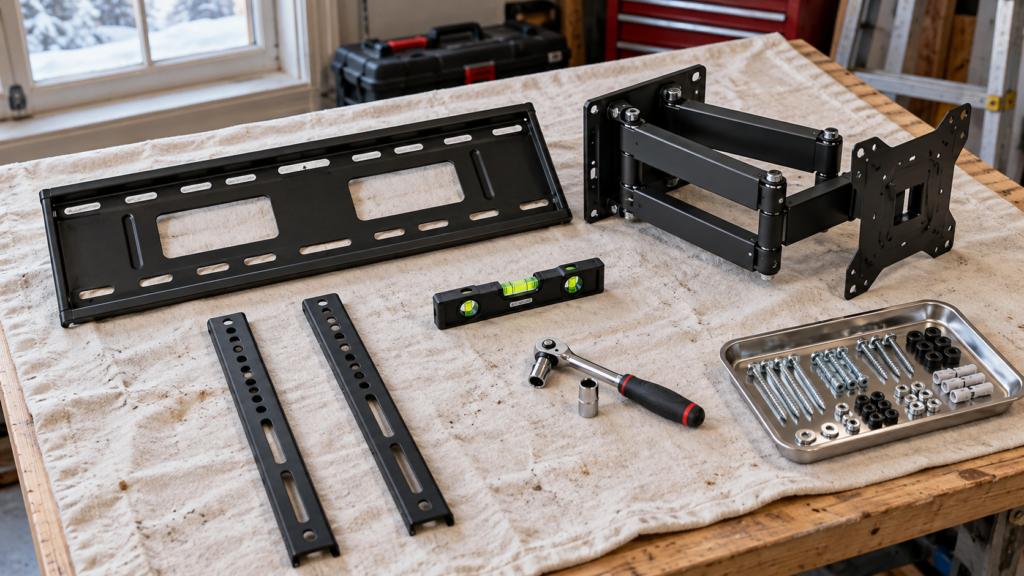
Fixed mounts hold the TV flush and are the cleanest look, best when there’s one clear seating angle. Tilting mounts add a few degrees of downward angle, useful for reducing glare on TVs mounted higher than eye level. Full-motion mounts extend and pivot, the right call for corner installs or rooms with more than one seating area.
As a rough guide: bedrooms and single-sofa living rooms usually call for a fixed or tilting mount, since there’s one dominant viewing angle to design for. Kitchens, corner installs, and open-concept living spaces with seating on two sides tend to benefit from full-motion, even though it costs more — the flexibility to pull and swivel the screen ends up mattering more than the cleaner look of a fixed mount in those layouts.
Your wall type changes everything
The wall behind the drywall determines almost everything about the install. Standard drywall over wood studs is the simplest case. Century-old homes — common in Edmonton’s Glenora, Toronto’s Annex, and similar heritage neighbourhoods across the country — are often lath and plaster instead: a wood lath grid under a hard plaster shell that cracks under a standard drywall anchor. The fix is a magnetic stud finder and lag bolts rated for the combined thickness, not a stronger anchor.
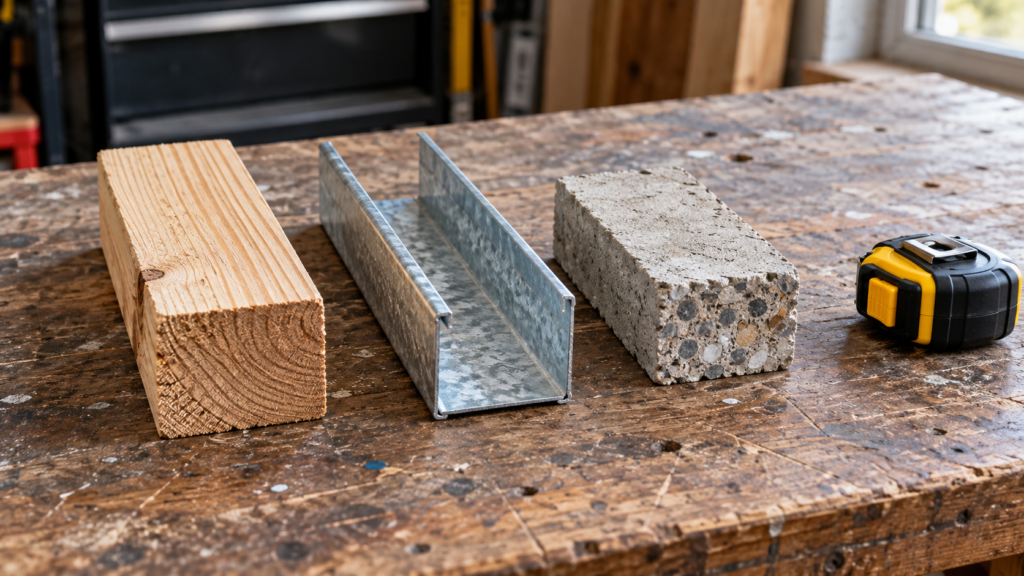
High-rise condos flip the problem: metal stud framing, which standard wood screws can’t bite into at all. That calls for heavy-duty toggle bolts rated for metal, a different hardware kit entirely.
Mounting over a masonry fireplace or a shared brick wall (common in Montreal triplexes and older Toronto rowhouses) needs masonry bits and anchors rated for concrete or brick, not drywall hardware at all. And on any exterior-facing wall, Canadian homes pack in thermal insulation and a vapour barrier behind the drywall — puncturing it carelessly to route cable can create a cold spot and, over a winter, condensation inside the wall cavity.
Common TV mounting mistakes we see
After enough installs, the same handful of mistakes show up again and again — almost always from a DIY attempt or a rushed job, and almost always avoidable.
Anchoring into plaster instead of the stud behind it. The anchor holds for a while, then works loose as the plaster shell slowly fatigues under the TV’s weight. By the time it fails, it’s usually without warning.
Running cable through insulated exterior walls without sealing the penetration. It looks fine on install day. Over a Canadian winter, the gap becomes a path for warm interior air to reach a cold cavity, and that’s a condensation problem waiting to happen.
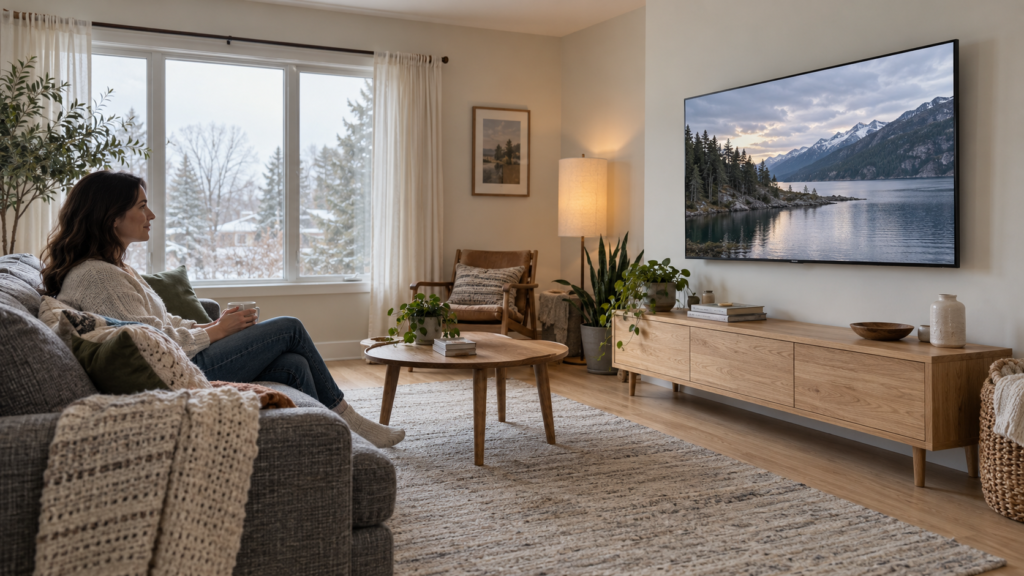
Mounting height chosen for the wall, not the seating. A TV centred on a feature wall often ends up too high for comfortable viewing. The right reference point is eye level from the primary seat, not the visual centre of the wall.
Using a mount rated below the TV’s actual weight. Mount weight ratings assume perfect conditions. Buying the next size up in rated capacity costs very little and removes the margin-of-error problem entirely.
The electrical code rule almost nobody follows
Dropping the TV’s flexible power cord behind the drywall to hide it feels harmless. It isn’t, and it’s against code everywhere in Canada.
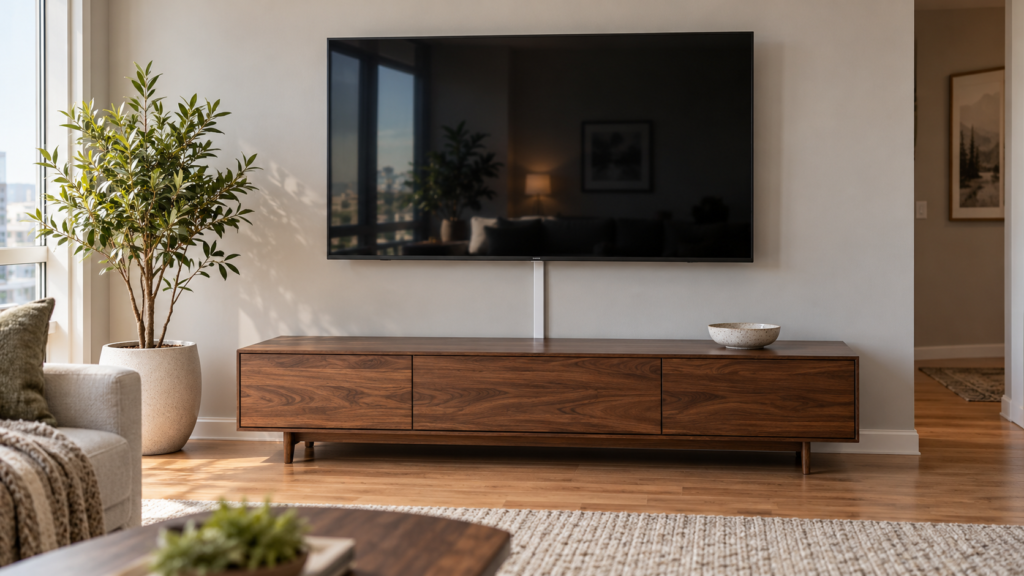
The legal fix is simple: leave the cord visible in a slim cable raceway, or have a licensed electrician install an in-wall rated power kit with a recessed outlet behind the TV. Both are code-compliant and both get you the cord-free look — the difference is doing it the way that won’t cost you a claim later.
Renters and condo owners: what to know before drilling
Strata councils and landlords frequently restrict drilling into demising (party) walls over acoustic transmission and unauthorized alteration concerns — get written approval before you mount anything in a condo or rental. If drilling isn’t an option, tension-mounted or command-strip systems rated for TV weight exist specifically for this, though they trade off some stability compared to a proper wall anchor.
Worth checking before you sign off on any install: some move-out inspections treat properly patched anchor holes very differently from an unpatched, cracked plaster wall. Asking your installer to patch and prime the holes at the end of a job — or at least save the anchor location so you can patch it yourself later — is a small ask that avoids a damage-deposit dispute down the line.
What professional installation actually costs in Canada
| Installation type | Cost (CAD) |
| Basic mount (wood stud/drywall) | $100–$150 |
| Large format 75"+ | $150–$250+ |
| Over fireplace / masonry | $150–$350 |
| Metal stud / condo surcharge | +$25–$50 |
| Code-compliant in-wall power | +$80–$150 |
Prices are broadly consistent across major Canadian markets, with a small premium in dense urban centres for parking and logistics. The biggest swing factor isn’t city — it’s wall type. A straightforward drywall mount and a masonry-fireplace install with code-compliant in-wall power can differ by $200 or more on the exact same TV.
DIY vs. hiring a professional: the real risk math
The case against DIY in Canada isn’t about skill — it’s about uninsurable liability. A concealed extension cord violates the electrical code and can void a fire claim. A missed stud on a 75″ TV is a structural failure waiting to happen. And a botched metal-stud anchor in a condo can mean redoing drywall you don’t own. None of that shows up in the sticker price of a bracket from a hardware store.
There’s also a time cost that’s easy to underestimate. A wall with unknown framing — plaster, unexpected wiring, an unusually placed stud — can turn a 30-minute job into an afternoon of troubleshooting for someone doing it for the first time. A technician who mounts TVs daily has already seen the failure mode you’re about to hit.
Explore the full TV mounting guide
Need a professional TV mount anywhere in Canada?
Frequently asked questions
Only if you want the power cord fully concealed in the wall. Mounting the TV itself doesn’t require one, but a code-compliant recessed outlet does.
Anything over 55″ in a room with more than one seating angle usually benefits from full-motion. Fixed mounts work best with one clear viewing angle.
It depends on the cause. Damage from a properly installed mount is typically covered under standard policies; damage tied to a code violation, like a concealed extension cord, can give an insurer grounds to deny the claim.
Usually with landlord permission. Condos add a layer: strata bylaws may restrict drilling into shared walls regardless of what your landlord allows.
Typically $100–$350 depending on TV size, wall type, and whether you need code-compliant in-wall power. See the full cost table above.
The number is the spacing between mounting holes in millimetres. Smaller TVs typically use 200×200 or 300×300; larger 55″+ sets commonly use 400×400. The bracket has to match your specific TV’s pattern.
Usually yes, but heat exposure matters — check the TV manufacturer’s maximum ambient temperature rating and leave adequate clearance from the firebox. Masonry mounting hardware is also different from standard drywall anchors.
30–60 minutes for a standard drywall mount. Plaster walls, masonry, metal studs, or in-wall power concealment all add time — budget 60–90 minutes for those.