
TV wall mounting · 7 min read · updated sep 2026
How to Hide TV Wires Without Cutting the Wall: Easy Options
By the Pixl Canada install team
Quick answer
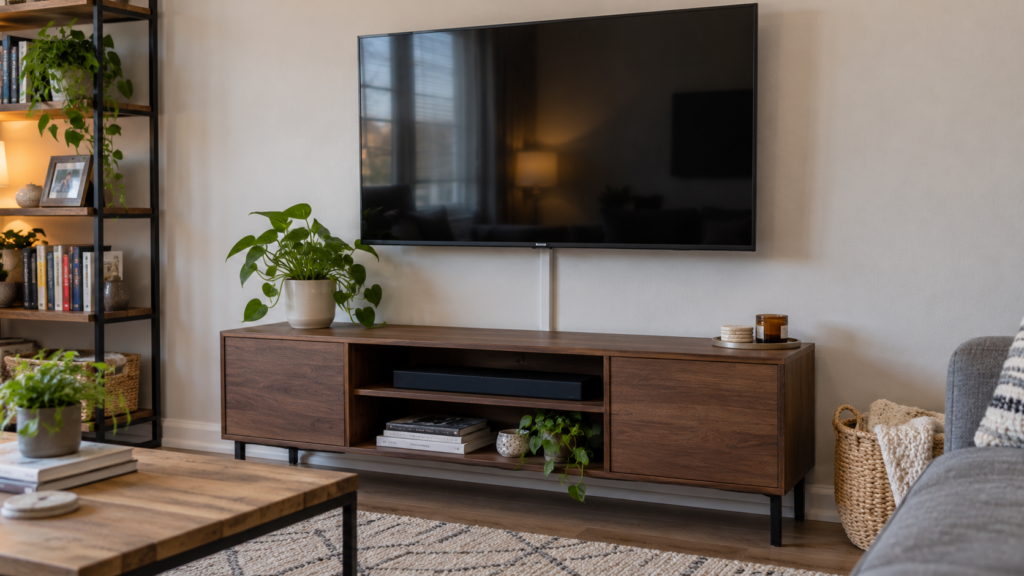
How do you hide TV wires without cutting the wall? Run them down a paintable cord cover (raceway) stuck to the wall, use a channel that is already there, or place a console under the TV so cords drop straight behind it. Cutting cables with wireless speakers and cable sleeves helps too. Never push a regular power cord inside the wall.
Why you should not just push the cords into the wall
A TV’s power cord and any extension cord are flexible cords, not permanent wiring. They are not made to live inside a wall cavity, where damage and heat can go unnoticed.
The Electrical Safety Authority (ESA) in Ontario is clear on this. Its ESA flash notice on extension cord misuse says flexible extension cords must never take the place of permanent wiring. The ESA indoor safety tips add: do not staple or nail cords in place, do not use extension cords as long-term power, and hire a licensed electrical contractor if you need a permanent outlet.
HDMI and other low-voltage cables are a different story, but the power cord is the one that decides your options. Everything below keeps the power cord outside the wall, where it belongs. For the legal in-wall options, see how to hide TV wires legally in Canada.
How to hide wires from a mounted TV without cutting the wall
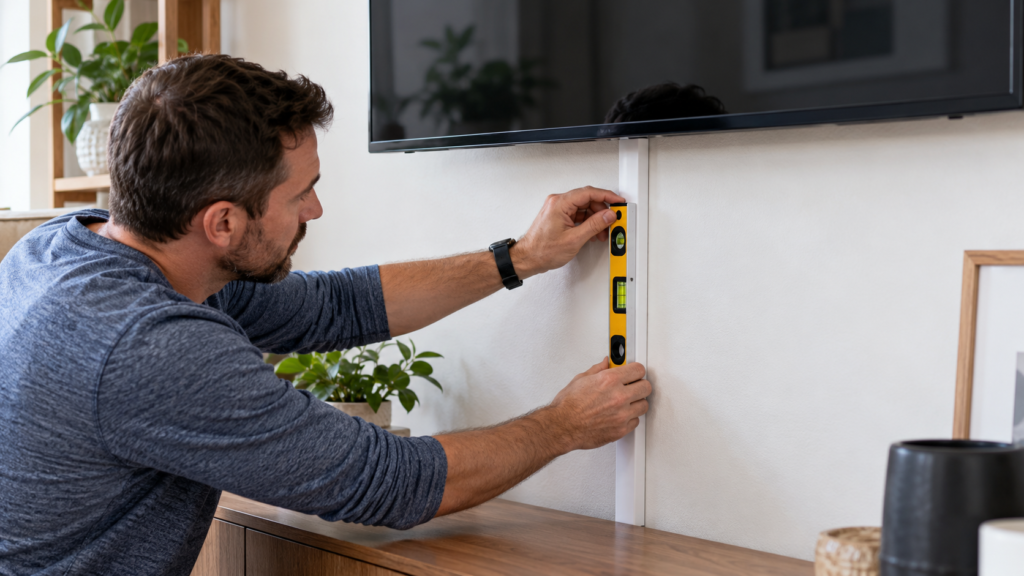
The most popular fix is a paintable cord cover, also called a raceway. It is a slim plastic channel that sticks to the wall and runs from the TV down to the outlet.
Legrand describes its Wiremold CordMate II cord cover kit as suited to TV and home entertainment wiring, with a self-adhesive back and a paintable finish. Legrand also notes it is designed for protecting electrical cords and low-voltage cabling, so the TV’s power cord and HDMI can share it.
- Plan the route. Go straight down from the centre of the TV to the outlet or console. Straight lines look cleaner than diagonals.
- Measure and cut. Cut the channel with a fine-tooth saw or the cutter in the kit. Use the corner and elbow pieces for turns.
- Clean the wall. Wipe off dust so the adhesive grips. On textured walls, a couple of small screws or finishing nails keep it from peeling over time.
- Stick it on and load the cords. Snap the lid open, lay the cords in, and close it.
- Paint it. Use the same wall paint. Once painted, most people stop noticing it.
Other ways to hide TV cords on the wall
You have more options than a raceway. Mix and match them to cut the number of visible cords, then hide the rest.
- Use a channel that is already there. Some homes have a conduit or pass-through plates behind the TV spot from the builder or a past install. Pulling new cables through it is quick and leaves nothing visible.
- Mount the TV low over a console. If the bottom of the TV sits just above a media console, the cords drop straight down behind it. No channel needed.
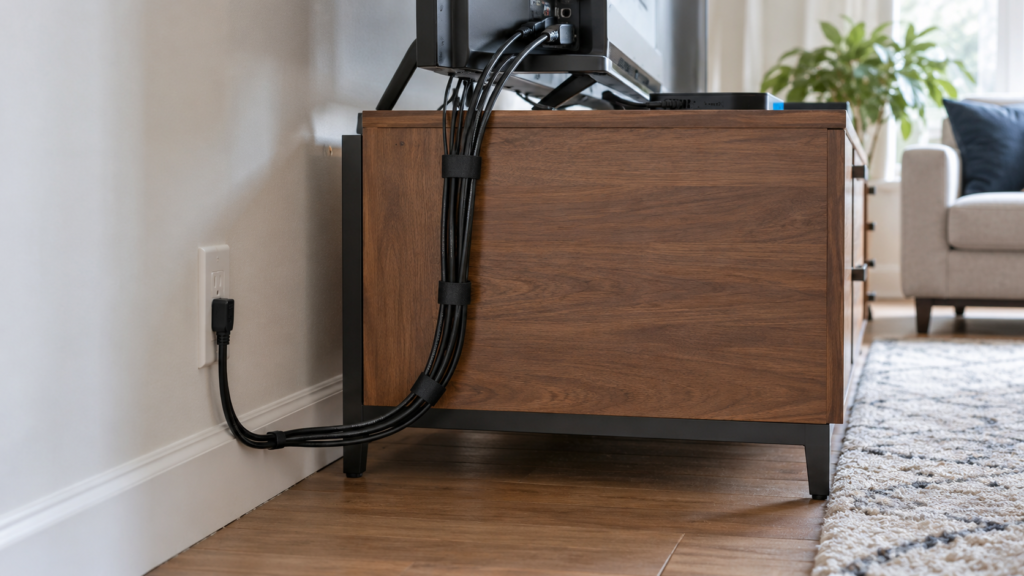
- Bundle cables in a sleeve. A fabric or split-loom sleeve turns four or five loose cords into one neat tube. Good behind furniture, less so on a bare wall.
- Go wireless where you can. A soundbar with a wireless subwoofer or rear speakers removes long speaker runs. A streaming stick plugged into the TV removes a separate box and its cables.
- Put devices behind the TV. A small streaming box or game console bracket behind the screen means only the power cord has to come down.
- Add an outlet behind the TV. This does need a small opening and a licensed electrician, but it is the only way to get the power cord fully out of sight legally. Our in-wall wiring guide explains how that works.
We hide TV wires for $25 in an existing channel, $60 in a raceway or $99.50 inside the wall.
Which option is best? Cost, look and difficulty compared
For most people, a painted raceway gives the best result for the money. If you want zero visible cords, you will need in-wall work done to code.
| Method | Typical DIY cost | Look | DIY difficulty | Pixl price |
|---|---|---|---|---|
| Paintable raceway | Low (kit only) | Neat, visible up close | Easy | $60, material included |
| Existing channel | Almost nothing | Fully hidden | Easy to moderate | $25 |
| Console under the TV | Free if you own one | Clean, cords behind furniture | Easy | n/a |
| Cable sleeve | Low | Tidy, still visible | Easy | n/a |
| Wireless soundbar and sub | Cost of the gear | Fewer cables overall | Easy | Soundbar install $50 |
| Devices mounted behind TV | Low (bracket) | Only the power cord shows | Easy | $25 per device |
| In-wall (done to code) | Electrician required for power | Fully hidden | Hard | $99.50, fire-resistant HDMI included |
How to hide TV wires without a feature wall
Treat the cords as part of the wall. Paint the raceway the wall colour and keep it in a single straight vertical line under the TV.
A few more tricks help on a plain wall:
- Centre the TV over the outlet if you can, so the raceway is short.
- Put a slim console, plant or floor speaker under the TV to break up the line.
- Pick a raceway size that fits your cords snugly. An oversized channel stands out more.
Hanging the TV above a fireplace? The wire route changes because of the mantel and heat. Our TV above fireplace guide covers that setup.
DIY or hire a pro?
Raceways, sleeves and console placement are easy DIY jobs. Anything that adds or moves an outlet is electrical work and belongs with a licensed electrician.
DIY is fine when:
- You are using a stick-on raceway, sleeves or furniture to hide cords.
- You are renting and want something removable.
- You are comfortable cutting plastic channel and painting.
A pro helps when:
- You want cords fully hidden behind the TV.
- You are mounting the TV at the same time and want it all planned together.
- You are not sure which cables can legally go inside the wall.
Pixl Canada charges $25 to run cables through an existing channel, $60 for a raceway with material included, and $99.50 for in-wall cable concealment with fire-resistant HDMI included. TV mounting starts at $80 for TVs up to 60 inches. Our technicians are licensed and carry $5 million in liability insurance, and you pay after the job is done. Mounting it yourself first? Start with our step-by-step on how to mount a TV on the wall.
Want clean walls without the guesswork? Book TV mounting and wire hiding with Pixl Canada, or call or text (587) 899-7495. We are open 7 days a week.
Frequently asked questions
How do you hide wires from a mounted TV without cutting the wall?
Use a paintable cord cover (raceway) that sticks to the wall and runs to the outlet, then paint it the wall colour. You can also mount the TV low over a console so cords drop behind it.
What are some ways to hide cable TV wires?
Raceways, cable sleeves, furniture placement, wireless speakers and mounting small devices behind the TV all reduce visible cables. In-wall kits done to code hide them completely.
Can I put the TV power cord inside a cord cover?
Yes. A surface raceway sits on the outside of the wall, and Legrand says its CordMate II kit is designed to protect electrical cords and low-voltage cabling. The problem is only running the power cord inside the wall cavity.
Can I run an extension cord behind the wall to my TV?
No. ESA says flexible extension cords must never take the place of permanent wiring. If you need power behind the TV, have a licensed electrician add a proper outlet.
Will a cord cover damage my wall if I rent?
Adhesive can pull off some paint when removed. Peel it slowly, or warm the adhesive with a hair dryer first. Check your lease before using screws.
Can HDMI cables go inside the wall?
Some can, if they carry an in-wall fire rating. The rules differ from power cords, so read our guide to hiding TV wires legally in Canada, or check with your local electrical authority.
Part of our complete TV wall mounting guide. Written by the Pixl Canada install team: licensed technicians with $5 million liability insurance, installing TVs, security cameras, smart home devices and appliances across Canada.
Related articles