
Security cameras · 8 min read · updated oct 2026
Can a Landlord Install Cameras in a Rental? Canadian Rules
By the Pixl Canada install team
Short answer
A landlord can usually put security cameras in hallways, lobbies, parking areas and outside entrances, as long as they are visible, signed and not aimed into a tenant’s unit. Cameras inside a rental unit, or aimed through windows and doors, are a privacy problem. Tenants can install their own cameras inside their unit, subject to the lease.
Own or manage a building? We plan camera positions on a walkthrough, install and test them. WiFi camera installation starts at $200 for 1 or 2 cameras; building systems get a free written quote. See Pixl for businesses
On this page
What a landlord can and cannot film
The line is simple: a camera can watch shared spaces, but it cannot watch a person’s home. A tenant’s unit is their private space, and both Ontario and BC give tenants protection from landlord intrusion. In practice, the question is not whether the building has cameras but where each camera points and what it records.
| Location | Usually acceptable? | Why |
|---|---|---|
| Building entrance and lobby | Yes, with signage | Shared space with a clear security purpose |
| Parking lot and garage | Yes, with signage | Theft and vandalism are real risks |
| Hallway, only showing the hallway | Yes, with signage | Shared space, but keep the view off unit doors where you can |
| Hallway camera that looks into an open unit door | Risky | It can capture the inside of a home |
| Laundry room or bike room | Often yes, with signage | Shared space, but never aim at changing areas |
| Inside a rental unit | No | It is the tenant’s private home |
| Through windows or onto balconies | No | A heightened expectation of privacy |
| Washrooms | No | Federal guidance calls video surveillance there inappropriate |
| Any camera that records conversations | No | Audio can break the Criminal Code interception rules |
The Office of the Privacy Commissioner of Canada (OPC) says cameras should not be aimed at areas where people have a heightened expectation of privacy, and that video surveillance of washrooms is inappropriate. Its guidelines for private-sector video surveillance also say sound should not be recorded without a specific need. Read the OPC guidelines for overt video surveillance in the private sector for the full text.
The rules that apply, province by province
There is no single national landlord-camera law. Three layers apply at once: your province’s tenancy law, privacy law for organizations, and the Criminal Code for audio. This table covers the two provinces we get asked about most, and the general rule for the rest.
| Province | Landlord entry to a unit | Privacy protection for tenants |
|---|---|---|
| Ontario | Written notice at least 24 hours ahead, for a stated reason, in daytime hours, with limited exceptions such as emergencies | The landlord must not substantially interfere with the tenant’s reasonable enjoyment of the unit |
| British Columbia | Written notice at least 24 hours and not more than 30 days ahead, between 8 a.m. and 9 p.m. unless the tenant agrees, with a narrow emergency exception | Tenants have a right to reasonable privacy and freedom from unreasonable disturbance |
| Quebec and other provinces | Notice rules vary; check the provincial tenancy rules or tribunal | Civil privacy rights apply in every province, and Quebec’s Civil Code and Charter protect private life |
The entry rules matter for cameras because a landlord who cannot walk into your unit without notice also cannot watch inside it all day with a camera. You can read the exact wording in the BC Residential Tenancy Act (section 29 covers entry) and the Ontario Residential Tenancies Act, 2006.
Landlords who run a rental business are also generally treated as organizations under federal or provincial private-sector privacy law. That means they must have a reason for collecting video, tell people about it, keep it secure and not use it for unrelated purposes.
Signs, storage and access to footage
If you operate cameras in a building, the OPC guidelines set a practical standard that is worth following even where a province has its own wording:
- Post a clear notice before people enter the monitored space, with a contact for questions and access requests.
- Collect as little as possible. Narrow each camera’s field of view to the area it needs to cover.
- Limit retention. Keep recordings only as long as needed for the purpose, then destroy them securely. Write the period down.
- Limit access. Only named people should be able to view or export footage, and every export should be logged.
- Honour access requests. A person can ask for images of themselves, and other identifiable people should be masked.
- Write a policy. State the purpose, camera locations, who can view, retention and review dates.
Own or manage a building? We plan camera positions on a walkthrough, install and test them. WiFi camera installation starts at $200 for 1 or 2 cameras; building systems get a free written quote.
Can tenants install their own cameras?
Usually yes inside your own unit, with limits. A camera aimed at the inside of your home, with no audio, is generally your decision. Problems start when the camera records neighbours or shared spaces, or when installing it damages the building.
- Inside your unit: normally fine. Check the lease for rules on alterations before you drill or leave anything permanent.
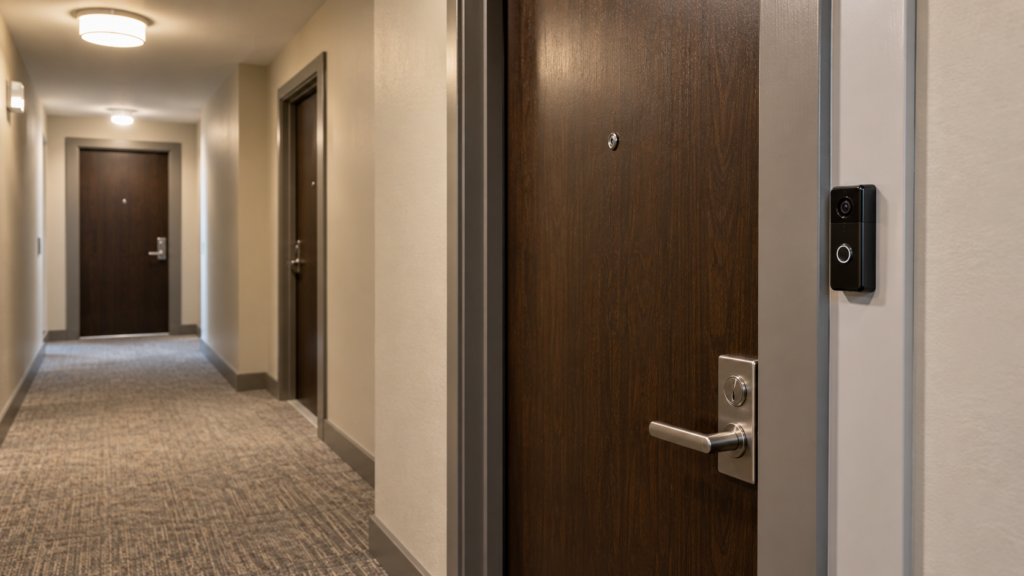
- Video doorbell on your unit door: a common conflict. If it records the whole hallway or a neighbour’s doorway, expect a complaint. Angle it toward your own door and check the field of view in the app.
- Balcony or patio cameras: keep them on your own space. Do not aim them at the next balcony.
- Audio: turn it off. Recording other people’s private conversations can be a Criminal Code offence. See our guide to security camera audio rules in Canada.
- Condos and strata: building rules can restrict cameras facing shared areas. See doorbell cameras in Canadian condos.
Renters who cannot drill can often use a battery or plug-in camera on a shelf or a no-damage mount. Ask the landlord in writing before you attach anything to common walls or door frames.
What to do if a landlord’s camera crosses the line
- Document it. Take dated photos of where the camera is and what it can see. A photo of the camera’s angle is usually more useful than trying to get the footage.
- Raise it in writing. Ask what the camera is for, whether it records, and who can see it. Many landlords adjust an angle once asked.
- Ask for the footage of yourself. Under privacy law for organizations, you can request images of yourself. Others on the video should be masked.
- Use the tenancy tribunal. In Ontario that is the Landlord and Tenant Board. In BC it is the Residential Tenancy Branch.
- Consider a privacy complaint. Landlords that run a rental business are generally subject to private-sector privacy law, so a complaint to the federal or provincial privacy regulator may be available.
- Call the police if a camera points into a bedroom or bathroom, or you feel unsafe.
For landlords: a compliant camera setup
A well-planned system protects the building and avoids complaints. The mistakes we see most are cameras that see into unit doorways, no signs, and footage that nobody manages.
- Write down the purpose first, for example vandalism, package theft or parking incidents.
- Walk the property and mark every camera position and the exact area it needs to cover.
- Choose cameras that let you mask or crop areas, and turn audio off.
- Place signs at every entrance to monitored space.
- Store footage on a local recorder with a password and an access log.
- Set a retention period and a deletion routine, and review the system once a year.
If you own or manage a multi-unit building, we plan the camera positions with you on a walkthrough, then install and test them. WiFi camera installation starts at $200 for one or two cameras, and wired recorder systems and building systems get a free written quote. You pay after the job. See Pixl for businesses and our business security camera system guide.
Frequently asked questions
Can a landlord put a camera inside my apartment?
No, not as a normal security measure. A rental unit is the tenant’s home, and landlords must follow the entry-notice rules of their province. A camera that records inside the unit interferes with the tenant’s privacy and enjoyment.
Can a landlord put a camera in the hallway outside my door?
Often yes, if it is visible, signed and has a security purpose. It should show the hallway, not the inside of your unit. If the angle looks into your doorway when the door is open, raise it in writing.
Do landlords have to tell tenants about cameras?
Privacy guidance says organizations should post a clear notice before people enter a monitored area. Landlords should also say what the cameras are for, who can view the footage and how long it is kept.
Can I install a doorbell camera as a renter?
Usually, but check the lease and any building rules first. Avoid drilling without permission. Angle the doorbell toward your own door, and turn off audio so you do not record neighbours’ conversations.
Can a landlord record audio in common areas?
Privacy guidance says sound should not be recorded without a specific need, and recording private communications can break the Criminal Code. For a building camera, keep audio off.
Who do I complain to about a landlord's camera?
Start with the landlord in writing. Then you can apply to your provincial tenancy tribunal, such as Ontario’s Landlord and Tenant Board or the BC Residential Tenancy Branch, and ask whether a complaint to a privacy regulator makes sense for your case.
This guide explains general rules and is not legal advice. For your situation, talk to a lawyer, a tenant advocacy group or your tenancy tribunal.
Ready to book? Own or manage a building? We plan camera positions on a walkthrough, install and test them. WiFi camera installation starts at $200 for 1 or 2 cameras; building systems get a free written quote.
In Quebec, see Quebec’s Law 25 and your security camera system. Written by the Pixl Canada install team: licensed technicians with $5 million liability insurance, installing TVs, security cameras, smart home devices and appliances across Canada.
Keep reading
Are doorbell cameras legal in Canadian condos?
Strata and building rules
Do you need a security camera sign?
Notice rules and wording
Security camera laws in Canada
The full guide