
Appliances · 8 min read · updated sep 2026
Washer and Dryer Installation: What It Includes and Costs
By the Pixl Canada install team
Quick answer
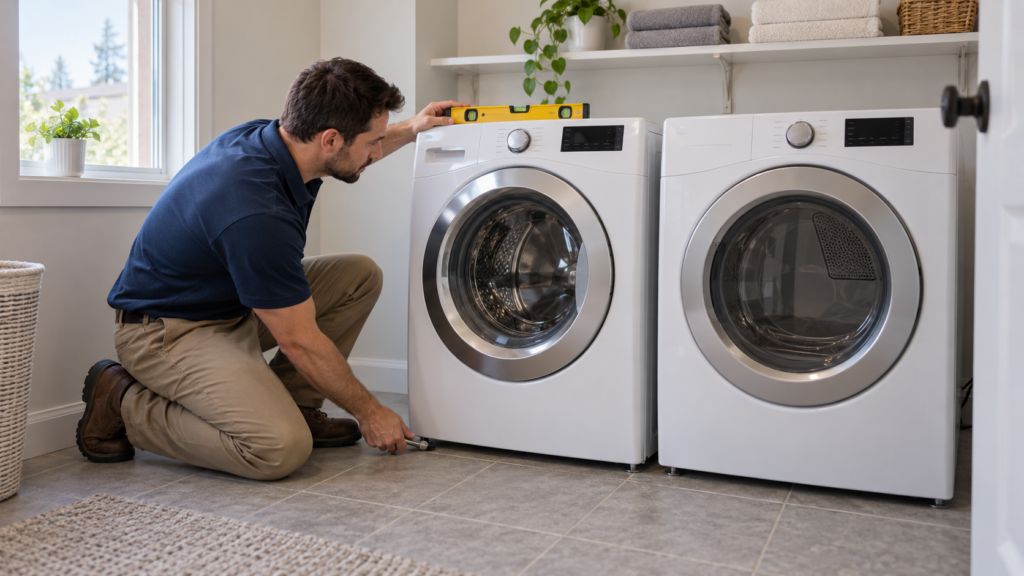
A proper washer dryer installation covers four jobs: connecting the hot and cold water hoses, placing the drain hose, levelling both machines and venting the dryer outside with metal duct. Pixl charges $110 for side by side and $150 for stacked. Gas dryers also need a licensed gas fitter for the gas connection.
What does washer dryer installation include?
A complete install means both machines are connected, level, tested and venting safely. It is more than sliding two boxes against a wall.
Here is what a good installer does, step by step:
- Check the space. Measure the width, depth and height, plus the doorways and stairs the machines must pass through.
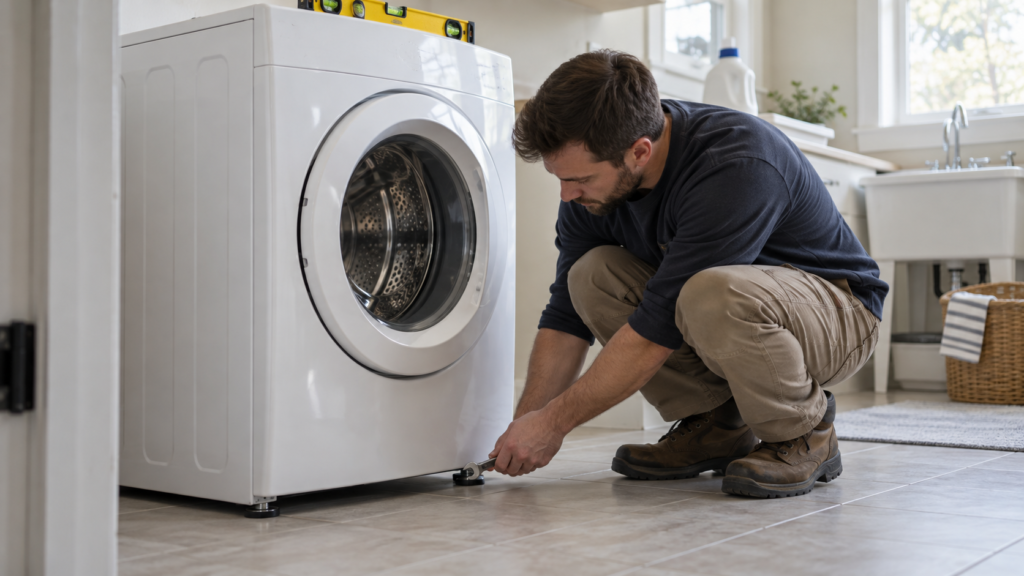
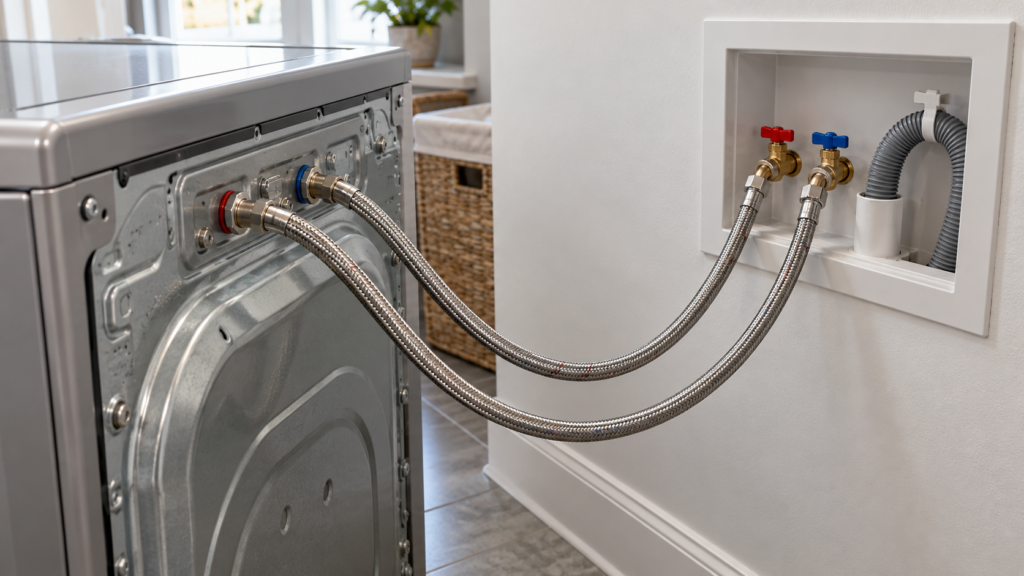
- Connect the water. Attach new hot and cold fill hoses to the washer and the shut-off valves, then check for drips with the water on.
- Set the drain. Secure the washer drain hose in the standpipe or laundry tub so it cannot pop out during the spin cycle.
- Level the machines. Adjust the feet until each unit sits flat and does not rock. A washer that is not level will shake and walk across the floor.
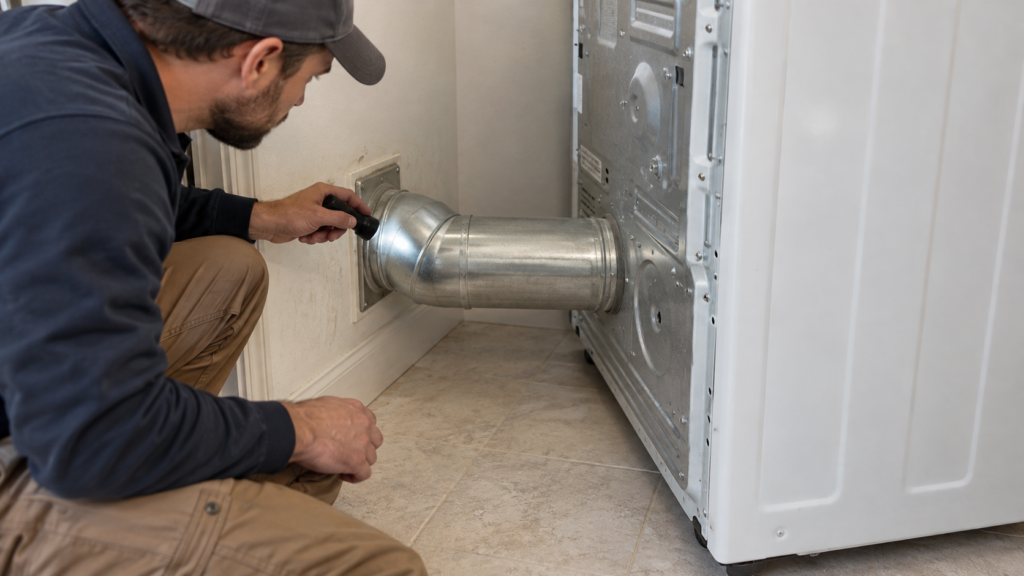
- Vent the dryer. Connect the dryer to the outside vent with rigid or semi-rigid metal duct, keeping the run short and free of crushed sections.
- Plug in and test. Run a short wash cycle and a short dry cycle to confirm filling, draining, spinning, heating and airflow.
- Clean up. Remove the packaging and leave the area tidy.
Do washers and dryers need to be plumbed in?
The washer does. It needs a hot and cold water supply and a drain, so it has to sit near shut-off valves and a standpipe or laundry tub. The dryer does not need water unless it is a steam model, which uses a cold water line.
Most electric dryers only need a 240-volt dryer outlet and an outside vent. Gas dryers need a gas line plus a regular 120-volt outlet. If your home has no laundry hookups at all, adding them is plumbing and electrical work, so hire a licensed plumber and electrician first.
Electric vs gas dryers: what changes?
An electric dryer is a plug-in job once the right outlet is there. A gas dryer needs a gas connection, and in Canada that work belongs to a licensed gas fitter.
Venting matters even more with gas. Technical Safety BC’s bulletin on gas dryer venting explains that a blocked vent can overheat the dryer and, on gas models, leak exhaust that may contain carbon monoxide. It recommends having gas dryers serviced by a licensed gas contractor at least once a year.
| Feature | Electric dryer | Gas dryer |
|---|---|---|
| Power needed | 240-volt dryer outlet | 120-volt outlet plus gas line |
| Who connects it | Installer or homeowner | Licensed gas fitter for the gas connection |
| Venting to outside | Required | Required, with carbon monoxide risk if blocked |
| Typical DIY friendliness | Good | Not a DIY job for the gas part |
We connect, level and vent your washer and dryer: $110 side by side or $150 stacked.
Side by side vs stacked: which install and how much space?
Choosing side by side or stacked
Side by side is easier to install and gives you a top surface for folding. Stacked saves floor space and suits condos and closets, but it takes more work and a stacking kit.
A few points to weigh:
- Compatibility: only front-load pairs made to stack can be stacked, and you need the kit that matches your brand and model.
- Access: with a stack, the dryer controls sit high up. Check that everyone in the house can reach them.
- Height: measure floor to ceiling, and leave room above the dryer for the vent connection and air flow.
- Service: repairs on a stacked pair often mean unstacking, so plan for access later.
How much space and clearance do you need?
You need the machine dimensions plus extra room behind for hoses and the dryer duct, and a little space at the sides for air and vibration. The exact clearances depend on your model, so check the installation guide that came with it.
Before delivery day, measure these:
- Width, depth and height of the laundry space, and the ceiling height for a stack.
- Depth behind the machines for hoses and the duct. Cramming the dryer against the wall is how ducts get crushed.
- Door clearance in front, especially for front-loaders with wide doors.
- Every doorway, hallway and stair the machines must pass through.
- Closet doors. Many manufacturers require vented doors when the dryer sits in a closet.
Common washer and dryer installation mistakes
The most common mistake is using plastic or foil dryer duct. Close behind are kinked hoses, reused old hoses and machines that are not level.
The City of Toronto’s clothes dryer fire safety tips advise using rigid or flexible metal duct to the outdoors. They warn that plastic and metal foil ducts are more likely to kink, sag and crush, which traps lint, and that plastic duct can ignite and melt. They also recommend the straightest, most direct path to the outside.
Watch out for these too:
- Reusing old fill hoses. Rubber hoses age and can burst. New hoses are cheap compared with a flooded basement.
- Kinked hoses or duct. Pushing the machines too far back bends the hoses and flattens the duct.
- A loose drain hose. If it is not secured, it can jump out of the standpipe mid-cycle.
- Skipping the level. An unlevel washer vibrates, gets loud and wears out faster.
- Ignoring the outside vent. Health Canada’s guide to moisture and mould says to check that your dryer vents outside, seal duct joints with foil tape and keep the outside vent clear of lint, snow and plants.
How much does washer and dryer installation cost?
At Pixl Canada, installing a side-by-side washer and dryer costs $110 and a stacked pair costs $150, before tax. New hot and cold washer hoses are $30 and a new dryer duct is $20.
| Service | Pixl price (CAD, before tax) |
|---|---|
| Washer and dryer, side by side | $110 |
| Washer and dryer, stacked | $150 |
| New hot and cold washer hoses | $30 |
| New dryer duct | $20 |
So a side-by-side install with fresh hoses and a new metal duct comes to $160, and a stacked install with both comes to $200. You pay after the job is done, by card, e-transfer or cash. Gas connections and new plumbing or electrical work are handled by the right licensed trade, so mention them when you book.
Can I install a washer and dryer myself, or should I hire a pro?
Yes, many people can, as long as the hookups already exist and the dryer is electric. The water valves, drain and 240-volt dryer outlet must be in place and in good shape.
DIY gets harder when any of these apply:
- The dryer runs on natural gas or propane.
- You are stacking the pair, which means lifting the dryer to shoulder height.
- There is no outside dryer vent, or the old duct is plastic or foil.
- The machines must go up or down narrow stairs.
- Your laundry area is a tight closet with little room to work behind the units.
Modern front-load washers are heavy and awkward. Always move them with two people and a dolly, and install the shipping bolts again if you plan to move a used washer.
DIY pros:
- No labour cost.
- Fine for a straight swap with existing hookups.
DIY cons:
- Heavy lifting, especially for a stack.
- Easy to miss a slow leak, a crushed duct or a loose drain hose.
- Gas work is not a DIY job.
Hiring Pixl: $110 side by side or $150 stacked, done by licensed technicians carrying $5 million in general liability insurance. We are open 7 days a week and can sometimes come the same day when we have an opening.
Ready to get your laundry running? Book our washer and dryer installation service, or call or text (587) 899-7495. In the Lower Mainland, see our appliance installation in Vancouver page, and check our service locations across Canada. Replacing more than laundry? We also handle dishwasher installation and over-the-range microwave installs.
Frequently asked questions
Can I install a washer and dryer myself?
Yes, if the water valves, drain and dryer outlet are already there and the dryer is electric. Get a second person for the lifting and use new hoses and metal duct. Leave any gas connection to a licensed gas fitter.
What's the average cost to install a washer and dryer?
Pixl charges $110 for a side-by-side pair and $150 for a stacked pair, before tax. New washer hoses add $30 and a new dryer duct adds $20.
Is it easy to install a washer and dryer?
A side-by-side swap with existing hookups is one of the easier appliance jobs. Stacking, venting through a new wall or connecting gas is much harder and is best left to a pro.
Do washer dryers need to be plumbed in?
The washer needs hot and cold water and a drain. A standard dryer only needs power and an outside vent, although steam dryers also connect to a cold water line.
What kind of dryer vent duct should I use?
Use rigid or semi-rigid metal duct to the outside. The City of Toronto warns that plastic and foil ducts kink, sag and trap lint, and plastic can ignite and melt.
Should I replace my washer hoses when installing a new washer?
Yes. Old rubber hoses age and can burst, and a new set is a small cost next to water damage. Pixl installs new hot and cold hoses for $30.
Related appliance guide: dryer vent length and duct rules in Canada. See also washer and dryer installation cost and the appliance installation guide. Written by the Pixl Canada install team: licensed technicians with $5 million liability insurance, installing TVs, security cameras, smart home devices and appliances across Canada.
Related articles