
Does a security camera actually lower Canadian home insurance?

A security camera can genuinely lower your home insurance premium in Canada — but the gap between “has a camera” and “qualifies for the discount” trips up more homeowners than almost any other detail in this space. Here’s exactly what insurers are actually looking for.
The requirement almost everyone misses
The word doing all the work here is ULC-listed. Underwriters Laboratories of Canada certifies monitoring equipment and monitoring stations to a specific standard, and insurers generally tie the discount to that certification — not simply to the presence of a camera on your property.
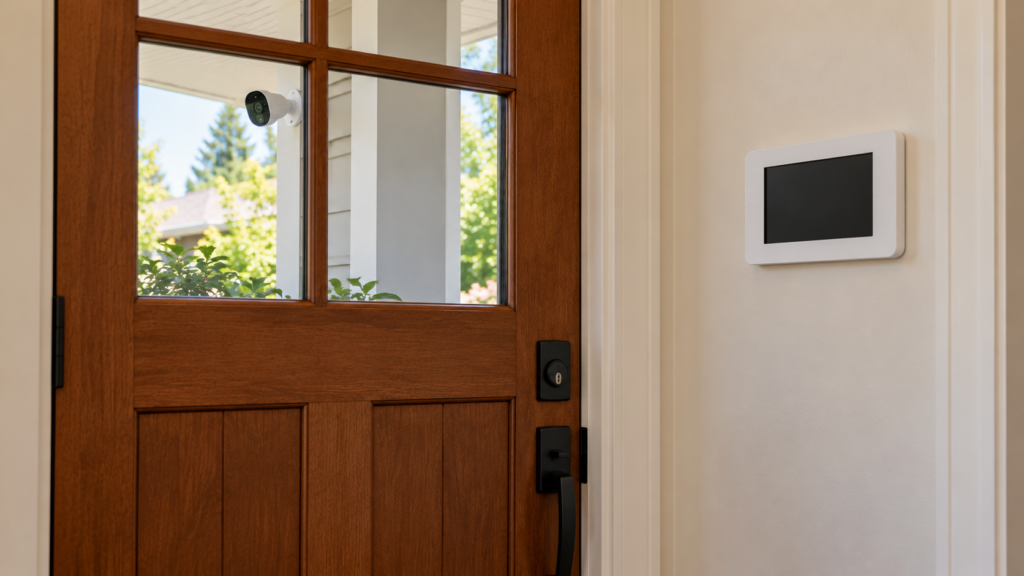
That distinction matters because a huge share of consumer cameras sold in Canada — doorbell cameras, standalone wireless units synced to a phone app — aren’t part of a ULC-listed, professionally monitored system. They’re genuinely useful for their own reasons, but they typically don’t move the needle on your premium the way a monitored system does.
How much you can actually save
The typical range insurers advertise is 5–20% off the home insurance premium, which translates to roughly $75–$360 a year on a standard $1,500 annual policy — the exact number depends heavily on your insurer, your base premium, and the specific system installed.
That’s ongoing, not one-time. Over five years, even the lower end of that range can offset a meaningful share of the system’s installation cost.
What doesn't qualify
A few common setups that don’t typically qualify for an insurance discount on their own: a single video doorbell with no broader monitored system, a DIY wireless camera synced only to your own phone with no professional monitoring station involved, and any system that isn’t ULC-listed regardless of how capable the hardware is. None of that means those setups aren’t worth having — it just means the insurance discount specifically isn’t the reason to buy them.
Is it worth it?
The honest way to think about it: treat the insurance discount as a partial offset on top of a system you’d want for security reasons anyway, not as the primary financial case for buying one. A full ULC-monitored system costs meaningfully more than a couple of standalone cameras, and the insurance savings alone rarely justify that gap by themselves — the security benefit is what carries the decision, with the premium reduction as a genuine but secondary bonus.
Where the math works out most cleanly is for homeowners who were already planning a monitored system for security reasons. In that case, the discount is close to pure upside — you were spending the money either way, and the premium reduction just shortens the effective payback period on a purchase you’d already decided to make.
Confirm with your insurer before you buy anything
Before buying anything specifically for the discount, call your insurer and ask two direct questions: which certifications qualify for their discount program, and what documentation they need after installation to apply it. Requirements vary enough between insurers that confirming first avoids paying for a system that doesn’t actually match your policy’s criteria.

Want a system that actually qualifies for an insurance discount?
Frequently asked questions
Usually not on its own — most insurers tie the discount to a ULC-listed, professionally monitored system rather than a standalone consumer camera.
It varies by scope, but expect a meaningfully higher cost than a single consumer camera, since it includes professional monitoring service on top of the hardware.
Yes — the discount isn’t automatic. You typically need to provide documentation of the system and its certification to your insurer directly.
Ongoing — it applies to your premium for as long as the qualifying system remains active and monitored.
It means Underwriters Laboratories of Canada has certified the equipment and monitoring station to a specific life-safety and performance standard, which is what most insurers require for the discount.