
Appliances · 8 min read · updated sep 2026
How to Install a Dishwasher: Step-by-Step DIY Guide for 2026
By the Pixl Canada install team
Quick answer
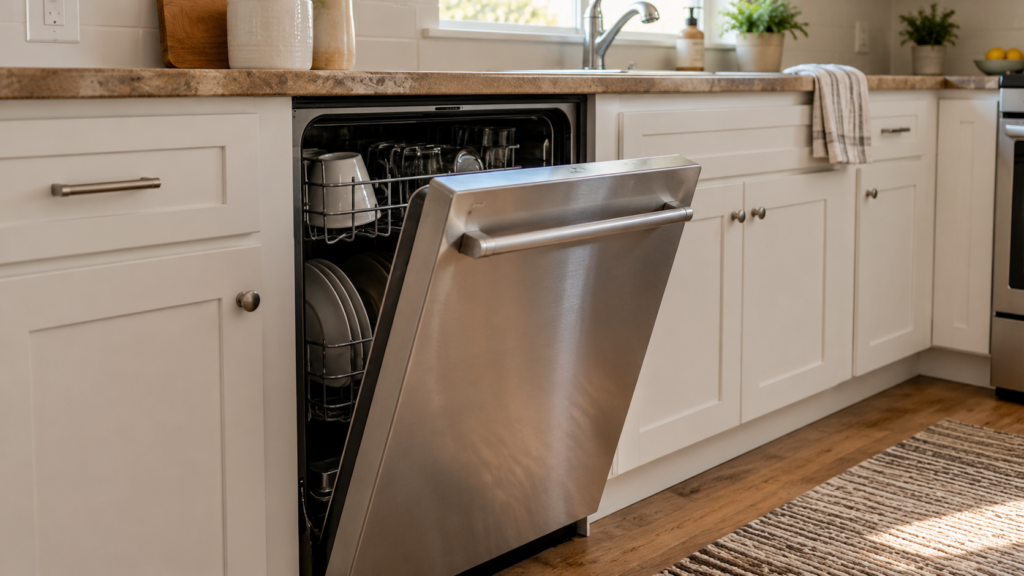
To install a dishwasher, measure the opening, shut off the water and power, and remove the old unit. Then attach a 90-degree elbow and water line, route the drain hose with a high loop or air gap, connect power, slide the new unit in, level it, secure it to the counter or cabinets and check for leaks.
Is it hard to install a dishwasher yourself?
Replacing a built-in dishwasher is a moderate DIY job if the water line, drain and power are already in place. A new installation where none of those exist is a different project and usually needs a plumber and an electrician.
Manufacturers set a high bar. Bosch’s dishwasher installation instructions say they are meant for qualified installers, that only qualified electricians should do electrical work and that the unit must meet all national and local plumbing and electrical codes. If you are unsure about any connection, stop and get help.
What do you need to install a dishwasher?
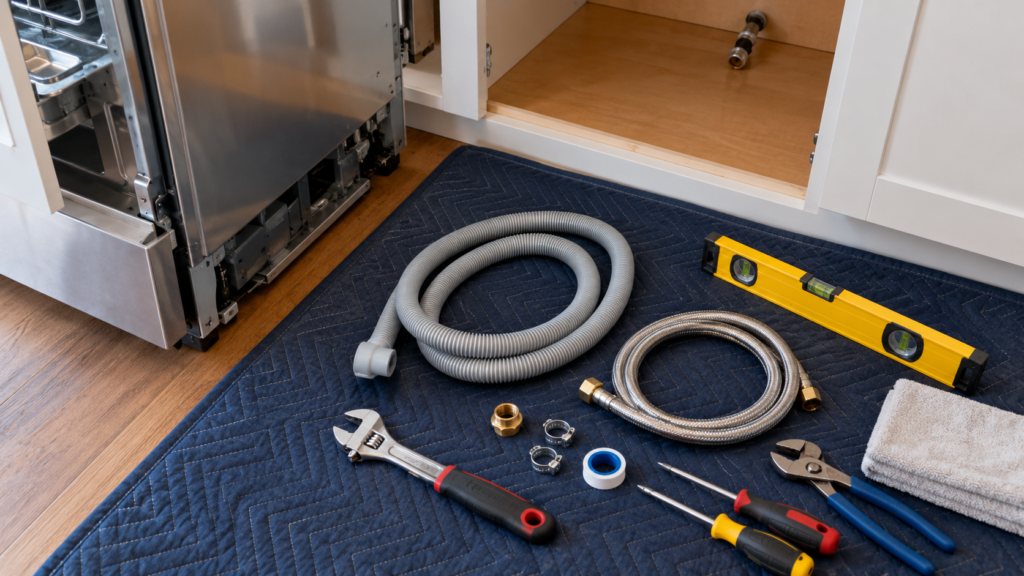
You need basic hand tools, a few parts that may not come in the box, and your model’s manual, because heights, hose lengths and brackets differ by brand.
| Item | What it is for | Notes |
|---|---|---|
| Tape measure and level | Checking the opening and levelling the unit | Level side to side and front to back |
| Adjustable wrench and pliers | Water line and drain clamp | Do not over-tighten fittings |
| Screwdrivers and drill | Mounting brackets and access panel | A hole saw if you need a new cabinet opening |
| Wire stripper and voltage tester | Hardwired connections | Confirm the circuit is dead before touching wires |
| 90-degree elbow | Joins the water line to the inlet valve | Bosch specifies 3/4 in. NPT female threads on one leg |
| Water supply line | Hot water from the shut-off valve | Braided line or at least 3/8 in. O.D. copper |
| Drain hose and clamp | Carries waste water to the sink drain or disposer | Use the new hose that ships with the unit |
| Power cord kit or strain relief | Plug-in or hardwired power | Some models sell the cord kit separately |
How do you measure for a new dishwasher?
Measure the width, height and depth of the cabinet opening at a few points. Standard built-in dishwashers are 24 inches wide and compact models are 18 inches wide. Check the height from the floor to the underside of the counter against the range listed in your model’s manual, since the legs only adjust so far. New flooring can change the height, so measure again after a reno.
How to install a dishwasher step by step
These steps cover replacing an existing built-in dishwasher. Always follow your model’s manual where it differs. If you like to watch first, Whirlpool’s dishwasher installation video walks through the plumbing, electrical, levelling and securing steps.
- Shut off power and water. Turn off the breaker for the dishwasher and close the hot water shut-off valve, usually under the sink. Test the wires with a voltage tester.
- Remove the old unit. Take off the kick plate, disconnect the water line and the power at the junction box or plug, and loosen the drain hose clamp under the sink. Remove the screws that hold the unit to the counter or cabinets, then slide it out on a piece of cardboard to protect the floor.
- Prepare the new unit. Lay it on its back on the packaging and screw the 90-degree elbow into the inlet valve, using thread sealant only if your manual calls for it. Do not over-tighten. Attach the water supply line to the elbow.
- Flush the water line. Bosch recommends flushing the incoming line for about 5 minutes before connecting it, to clear debris out of the inlet valve.
- Prepare the power. For a hardwired unit, remove the junction box cover and connect ground, neutral (white) and hot (black) to the matching terminals, with a strain relief on the cable. For a plug-in unit, route the cord to the receptacle. Bosch says to mount the junction box and receptacle in an adjacent cabinet, not behind the dishwasher.
- Install the mounting brackets. Decide how you will secure the unit before you bend the brackets. Top mounting suits wood or laminate counters. Side mounting into the cabinets suits granite, quartz and other stone that cannot be drilled.
- Slide it in. Feed the water line, drain hose and cord through the cabinet opening as you go. Bosch suggests pushing the unit about two-thirds of the way in, then reaching into the sink cabinet to pull the hoses and cord through so nothing kinks.
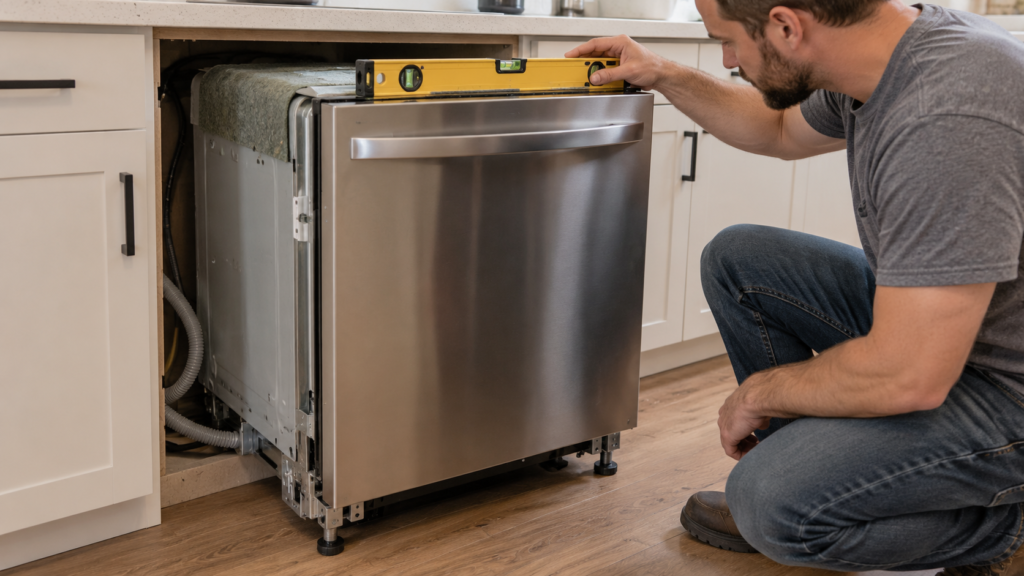
- Level it. Adjust the legs until the top is just under the counter and the unit is level side to side and front to back.
- Secure it. Screw the brackets into the counter or the cabinet sides. An unsecured dishwasher can tip forward when the door is open and a rack is loaded.
- Connect the water and drain. Tighten the supply line to the shut-off valve and clamp the drain hose to the sink drain or disposer (see the next section).
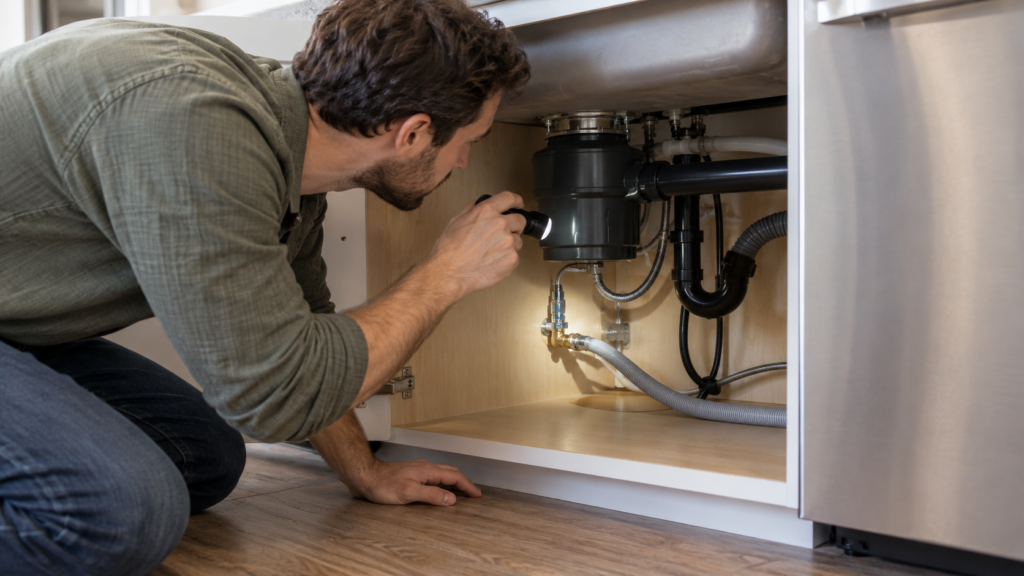
- Test for leaks. Turn the water and power back on, run a short cycle and watch the elbow, the valve and the drain clamp with a flashlight. Then reinstall the kick plate.
Rather not deal with the water line and drain? Dishwasher installation is $180, new inlet hose included.
How to install a dishwasher drain hose
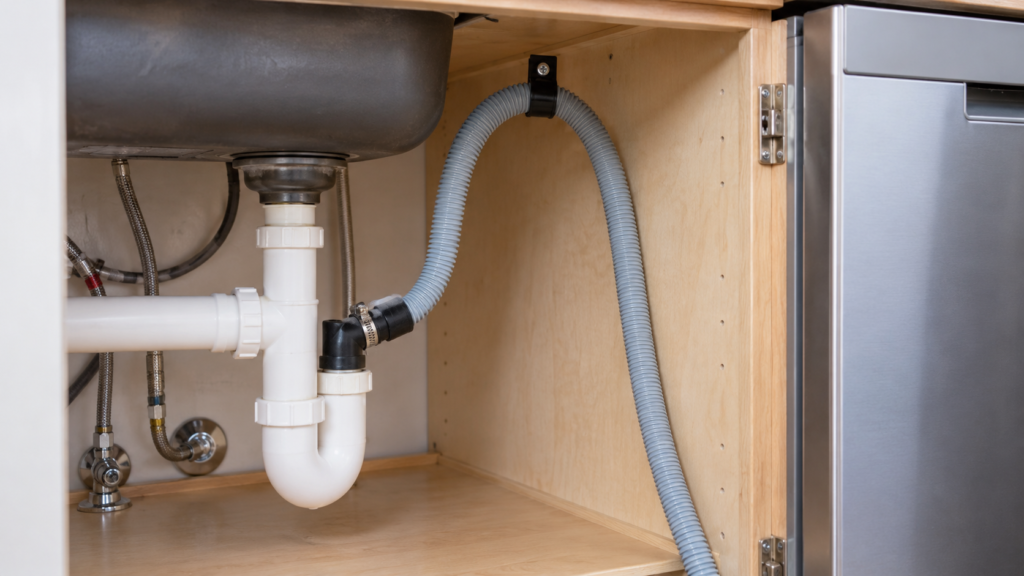
The drain hose needs either a high loop or an air gap so dirty sink water cannot flow back into the dishwasher. Which one you need depends on your local plumbing code, so check with your municipality before you choose.
- High loop: fasten part of the hose up high under the counter before it drops to the drain. GE Appliances notes that without an air gap, a high drain loop is needed for the dishwasher to drain correctly, at the height given in the installation instructions. Bosch’s instructions call for part of the hose to sit at least 20 inches (508 mm) above the cabinet floor.
- Air gap: a small fitting mounted on the sink or counter. The hose runs from the dishwasher up to the air gap, then a second hose runs down to the drain. Some jurisdictions require one.
- Disposer connection: if you connect to a garbage disposer for the first time, remove the knockout plug inside the disposer inlet first. A forgotten plug is a common reason a new dishwasher will not drain.
GE also recommends using the new drain hose that ships with the dishwasher, since an old hose can kink or clog.
Do you need a plumber to install a dishwasher?
Not usually for a straight replacement. If the shut-off valve, drain connection and power are already there and in good shape, a handy homeowner or an appliance installer can do the swap.
You do need licensed trades when the work goes beyond connecting to what is already there:
- New water or drain lines: adding a shut-off valve, a new supply line through the floor or a new drain tee is plumbing work. Call a licensed plumber.
- New electrical circuit or outlet: GE Appliances’ electrical requirements call for a 120-volt, individual, properly grounded circuit with a 15 or 20 amp breaker. If you do not have that, hire a licensed electrician. Permit rules vary by province, so check with your local electrical authority.
- Soldered copper: Bosch warns that soldering heat can damage the dishwasher and says to keep the flame at least 6 inches away. Leave sweated joints to a plumber.
Can a plumber install a dishwasher? Yes, and it makes sense when you need plumbing changes anyway.
DIY or hire a pro?
DIY saves money if you have the tools and the connections are already in place. Hiring a pro saves time and removes the risk of a slow leak under your cabinets.
DIY pros: no labour cost and you work on your own schedule.
DIY cons: awkward work on your back under the sink, a real risk of leaks or water damage if a fitting is loose, and you still need a licensed trade for new lines or circuits.
Hiring Pixl: our dishwasher installation service is $180 before tax and includes a new water inlet hose. A 6 ft drain hose is $30 and an installation kit is $30 if you need them. If you have not picked up the dishwasher yet, store pickup and delivery is $80. Our licensed technicians carry $5 million in liability insurance, and you pay after the job is done.
Doing a full kitchen refresh? See our appliance installation services, the washer and dryer installation guide and our over-the-range microwave installation guide.
Want it done in one visit? Book our dishwasher installation, check the cities we serve, or call or text (587) 899-7495. We are open 7 days a week.
Frequently asked questions
Can I install a dishwasher myself?
Yes, if you are replacing an existing unit and the water, drain and power are already in place. New lines or circuits need a licensed plumber or electrician.
What is required to install a dishwasher?
You need a cabinet opening of the right size, a hot water shut-off valve, a drain connection with a high loop or air gap, and a dedicated grounded circuit. You also need a 90-degree elbow, a supply line, the drain hose and basic hand tools.
Do you need a plumber to install a dishwasher?
Not for a straight replacement in most cases. You do need one if you are adding a new water line, shut-off valve or drain connection.
Does a dishwasher need a dedicated circuit?
Most manufacturers say yes. GE calls for an individual, properly grounded 120-volt circuit with a 15 or 20 amp breaker, and Bosch calls for a dishwasher-dedicated 15 amp circuit on its models.
Do I need a high loop or an air gap?
You need one or the other so drain water cannot flow back into the dishwasher. Some local plumbing codes require an air gap, so check yours before you buy parts.
How much does dishwasher installation cost?
Pixl charges $180 before tax, including a new water inlet hose. A 6 ft drain hose or an installation kit adds $30 each, and store pickup and delivery is $80.
See also dishwasher installation cost and the appliance installation guide. Written by the Pixl Canada install team: licensed technicians with $5 million liability insurance, installing TVs, security cameras, smart home devices and appliances across Canada.
Related articles