
Appliances · 8 min read · updated sep 2026
Range Hood CFM Guide: How Much You Need and How to Install It
By the Pixl Canada install team
Quick answer
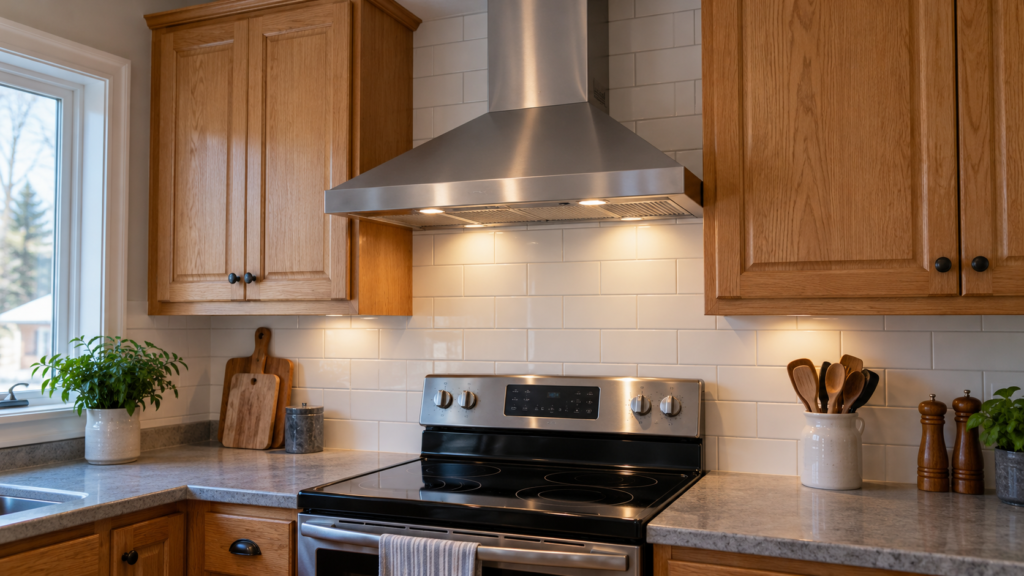
A common guideline is 100 CFM per linear foot of cooktop for a wall-mounted hood, so about 300 CFM for a 36-inch range, and 150 CFM per foot over an island. For gas, many manufacturers suggest about 100 CFM per 10,000 BTU. Treat these as starting points, then check your ducting and local make-up air rules.
How much CFM do you need for a range hood?
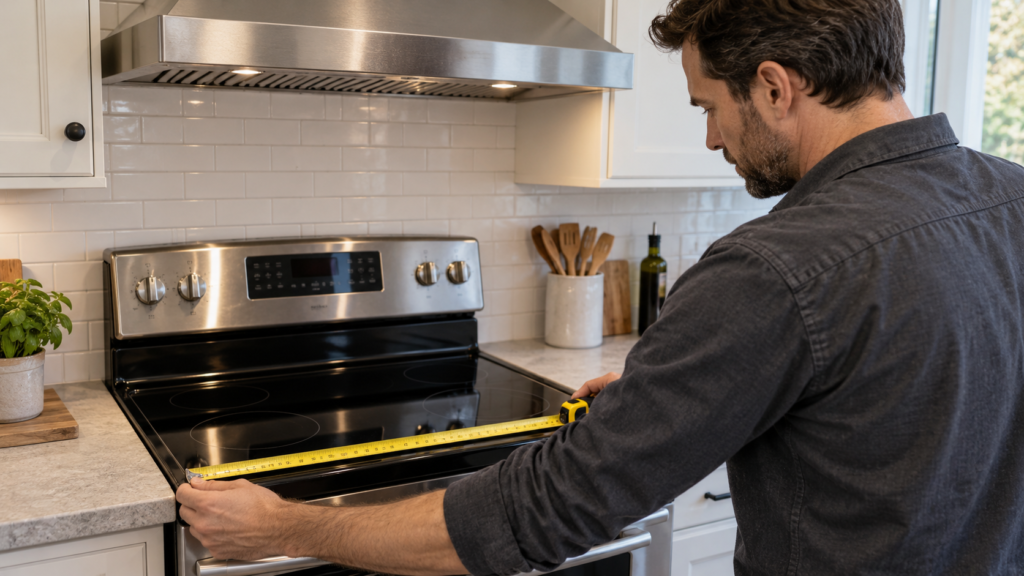
Size by the width of your cooktop first. The Home Ventilating Institute (HVI) recommends 100 CFM per linear foot for a wall-mounted hood and 150 CFM per linear foot for a hood over an island.
CFM means cubic feet per minute, the volume of air the fan moves. The table below applies the HVI guideline to common widths. Island hoods need more because there is no wall behind them to help contain smoke and steam.
| Cooktop width | Wall-mounted hood (100 CFM/ft) | Island hood (150 CFM/ft) |
|---|---|---|
| 24 in. (2 ft) | 200 CFM | 300 CFM |
| 30 in. (2.5 ft) | 250 CFM | 375 CFM |
| 36 in. (3 ft) | 300 CFM | 450 CFM |
| 42 in. (3.5 ft) | 350 CFM | 525 CFM |
| 48 in. (4 ft) | 400 CFM | 600 CFM |
HVI also lists lower minimums, for example 120 CFM for a 3 ft wall hood. The numbers above are the recommended rates, not the bare minimum. For professional-style cooktops, HVI says to follow the manufacturer’s specifications.
How many CFM for a gas range vs an electric range?
Gas ranges usually need more airflow because burners produce heat and combustion by-products. Broan-NuTone’s sizing advice is about 100 CFM per 10,000 BTU of total cooktop output, so a 50,000 BTU range points to around 500 CFM. For electric and induction cooktops, Broan-NuTone suggests 350 to 500 CFM is generally enough.
Add up the BTU rating of all the burners (it is on the spec sheet) and compare it with the width-based number. Use the higher of the two as your starting point, then adjust for how you cook. Frequent searing, frying and wok cooking justify more airflow.
Is 400 CFM enough for a range hood?
For most 30 to 36-inch wall-mounted hoods over an electric range, yes. It is above the HVI guideline for those widths and within the range Broan-NuTone suggests for electric cooking.
It may fall short over a large gas range. A 60,000 BTU cooktop points to about 600 CFM using the 100 CFM per 10,000 BTU rule. Remember that a hood only works if you turn it on. The Health Canada cooking and indoor air quality factsheet says running a range hood on high (300 CFM) while cooking can cut exposure to cooking pollutants by more than 80% compared with slower speeds. It also suggests cooking on the back burners and choosing a hood that fully covers the burners.
Do you need make-up air for a range hood?
You might, depending on the size of the fan and where you live. A powerful hood pushes air out of the house, and that air has to be replaced from somewhere.
Health Canada’s Ventilation and the Indoor Environment report explains that large exhaust fans can depressurize a home and cause backdrafting of chimneys and gas vents, which can raise carbon monoxide levels. It notes that larger fans, roughly 200 to 400 CFM and up, need a way to supply make-up air.
Make-up air rules are set by provincial and municipal building codes, and the thresholds are not the same everywhere. Before you buy a high-CFM hood, check with your local building department, especially if you have a gas water heater, furnace or wood-burning fireplace.
Want it sized, mounted and ducted properly? Range hood installation starts at $140.
Ducted vs ductless range hoods
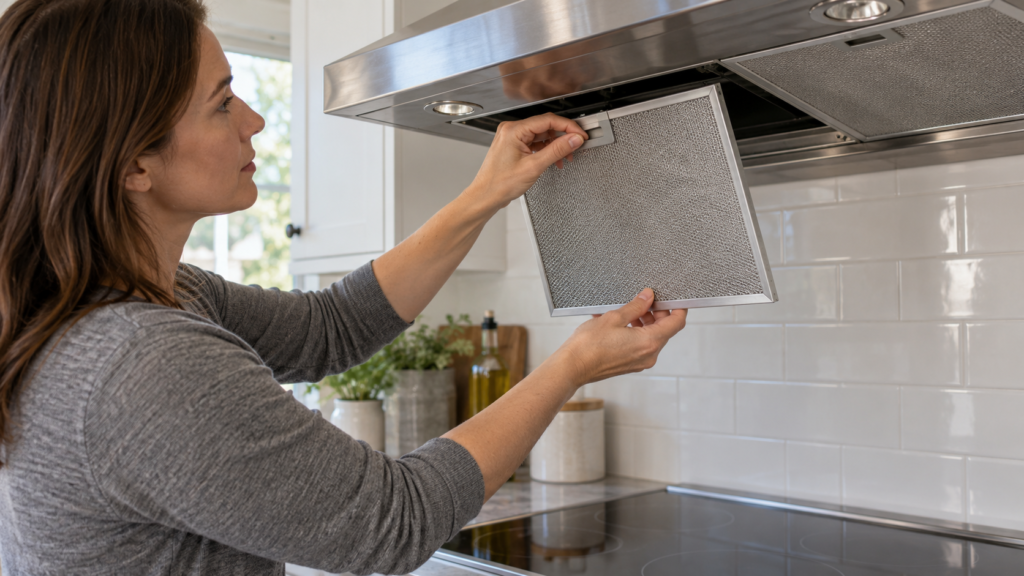
A ducted hood sends air outside. A ductless (recirculating) hood pulls air through grease and charcoal filters and blows it back into the kitchen.
- Ducted: removes smoke, moisture, heat and odours from the home. HVI recommends hoods that vent directly outside and notes that recirculating hoods do not actually ventilate.
- Ductless: easier to install where you cannot run a duct, such as some condos. It catches grease but leaves moisture and heat in the room, and the charcoal filters need regular replacement.
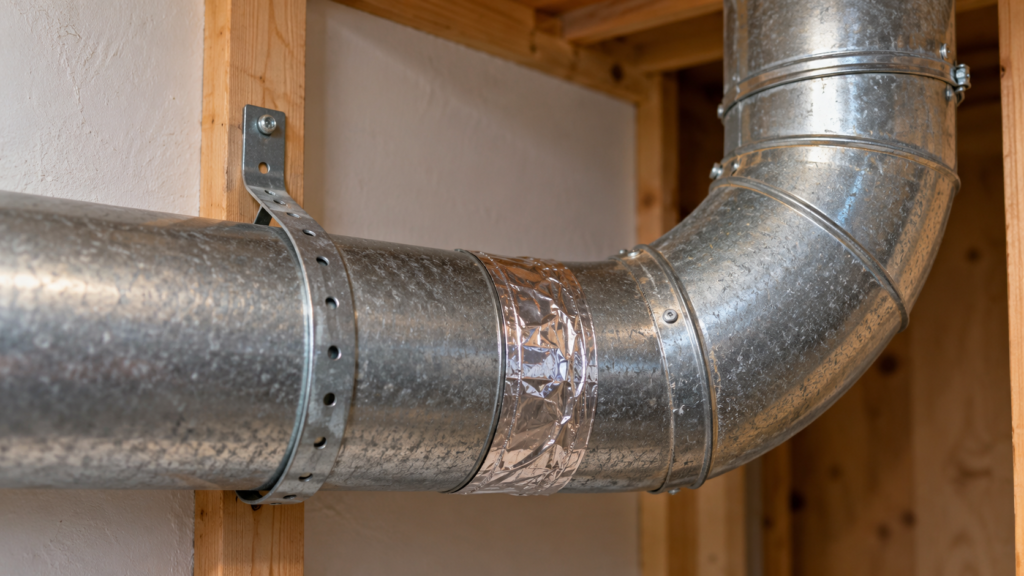
Duct size matters as much as the fan. Broan-NuTone lists a minimum of 3 x 10 inch rectangular duct, equal to 6-inch round. Higher-CFM hoods often need a larger duct, so use the size in your hood’s manual and never reduce it. Keep the run short, with as few elbows as possible, because every bend cuts real-world airflow.
Under-cabinet vs chimney range hood
An under-cabinet hood mounts to the bottom of the cabinet above the range. A chimney hood mounts to the wall where there is no cabinet, with a decorative cover hiding the duct.
Mounting height changes with the style. According to Broan-NuTone’s range hood specifications guide, under-cabinet hoods typically sit 20 to 24 inches above the cooktop and chimney hoods 24 to 30 inches. The hood should be at least as wide as the cooktop, and a slightly wider one captures better. Always follow the height in your hood’s installation manual, since some cooktops call for more clearance.
If you would rather have a microwave over the range than a hood, see our over-the-range microwave installation guide.
How to install a range hood
Replacing a hood with the same style and duct location is a manageable DIY job. Cutting a new vent through a wall or roof is a bigger project.
- Turn off the power at the breaker and confirm it is off with a voltage tester.
- Remove the old hood. Disconnect the wiring, undo the duct connection and the mounting screws, and lower it with a helper.
- Check the duct. Make sure it matches the new hood’s outlet size and position. Clean or replace a greasy, crushed or undersized duct.
- Mark and mount. Use the template in the box to mark the screw holes at the right height. Screw into studs or cabinet framing, not drywall alone.
- Connect the duct to the hood’s damper collar and seal the joints with foil tape. Do not use screws that stick into the airflow.
- Wire the hood to the existing supply as the manual shows, or plug it in if it uses a cord. A new circuit or outlet needs a licensed electrician.
- Test every fan speed and the light, and check that the exterior damper opens.
Venting a range hood through the wall vs the ceiling
Venting through an exterior wall is usually the simpler route, since the duct runs straight back to a wall cap. Venting through the ceiling and roof works for interior walls and islands but means cutting through the roof and flashing it properly to stop leaks. Either way, the duct must end outside at a cap with a damper, never in an attic, soffit space or wall cavity. If you are unsure about cutting into the building envelope, bring in a pro.
DIY or hire a pro?
A like-for-like swap is a reasonable DIY job. New duct runs, roof penetrations and new wiring are where hiring help makes sense.
DIY pros: no labour cost, and simple swaps take little more than basic tools and a helper.
DIY cons: hoods are awkward to hold level while you drive screws, poor duct connections leak grease and moisture, and roof or wall cuts can cause water damage if flashed badly.
Hiring Pixl: under-cabinet range hood installation (30 to 36 inches) is $140 before tax, a chimney range hood is $170, and a new exhaust duct is $50. Our licensed technicians carry $5 million in liability insurance and you pay after the job. See all of our appliance installation services, including the dishwasher install many people book at the same time.
Ready for a quieter, cleaner kitchen? Book range hood installation with Pixl, see the cities we serve, or contact us. You can also call or text (587) 899-7495, 7 days a week.
Frequently asked questions
How many CFM do I need for a 30-inch range hood?
Using the HVI guideline of 100 CFM per linear foot, a 30-inch wall-mounted hood needs about 250 CFM. Over an island, plan on about 375 CFM. Go higher for a gas range or heavy frying.
Is 400 CFM enough for a range hood?
For most 30 to 36-inch hoods over an electric or induction range, yes. For a high-output gas range, it may not be, so compare it with about 100 CFM per 10,000 BTU of cooktop output.
Does a 400 CFM range hood need make-up air?
It depends on your local building code and your home. Health Canada notes that fans in roughly the 200 to 400 CFM range and up need a make-up air supply to avoid backdrafting. Check with your local building department before you buy.
Can you have too much CFM for a range hood?
Yes. An oversized hood is louder, pulls more heated air out of the house and is more likely to need make-up air. Match the fan to your cooktop and cooking style rather than buying the biggest number.
Should a range hood be vented outside?
Yes, whenever possible. HVI recommends venting directly outside, and Health Canada notes that non-vented fans just spread odours and moisture around the kitchen.
How much does range hood installation cost?
At Pixl, an under-cabinet hood (30 to 36 inches) is $140 before tax, a chimney hood is $170, and a new exhaust duct adds $50.
See also range hood installation cost and the appliance installation guide. Written by the Pixl Canada install team: licensed technicians with $5 million liability insurance, installing TVs, security cameras, smart home devices and appliances across Canada.
Related articles