
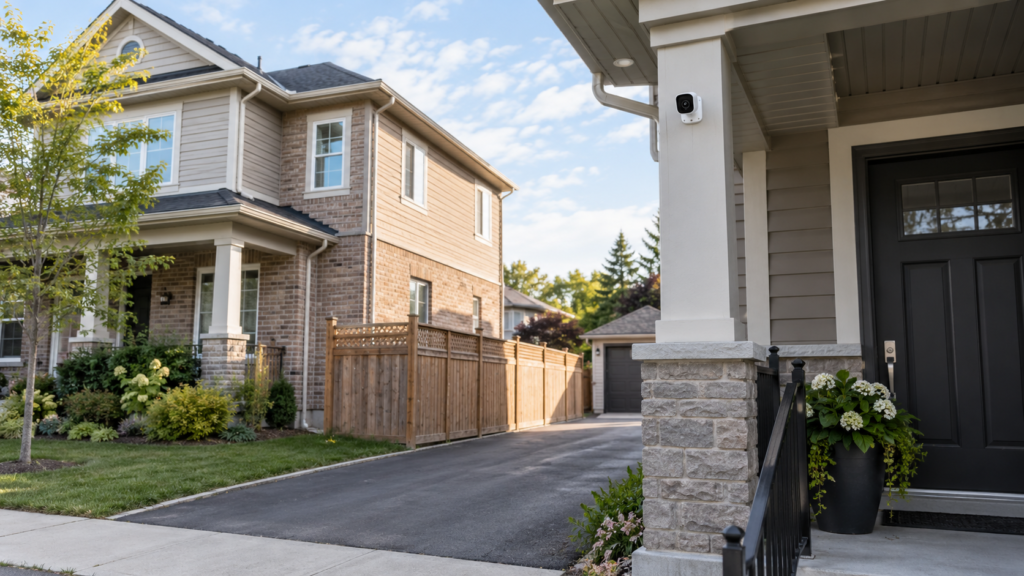
Can my neighbour's camera point at my house? A provincial guide
- Pay after the job
- Open 7 days
- $5M liability insurance
A camera on your neighbour’s house pointed roughly your way is one of the most common sources of neighbour disputes in Canada — and one of the most misunderstood. Sometimes it’s completely legal. Sometimes it isn’t. The answer depends on what the camera actually captures, and which province you’re in.
Start here: is it video or audio?
Before anything province-specific, ask the most important question first: is the concern about video, or does the camera also pick up audio? Video of a shared property line or a sliver of your yard that happens to fall in frame is a very different legal question than a camera capturing conversations. Audio carries federal criminal exposure under Criminal Code section 184, covered in full in our guide to security camera audio law. This article focuses on the video side, and the provincial rules that apply to it.
Ontario: intrusion upon seclusion
Ontario has no provincial privacy statute that covers neighbour cameras, so a complaint usually runs through the common law tort of intrusion upon seclusion, which the Ontario Court of Appeal recognized in Jones v. Tsige (2012). Courts have limited it to deliberate invasions that a reasonable person would find highly offensive. The test isn’t really about the camera itself — it’s about whether it’s capturing a space where you have a reasonable expectation of privacy. A camera that happens to catch your driveway from an angle is a different case than one clearly aimed at your bedroom window.
BC, Manitoba, Saskatchewan and Newfoundland and Labrador: Privacy Acts
These four provinces each have a Privacy Act that makes it a civil wrong to wilfully violate another person’s privacy, without proof of financial loss. Courts decide each case on its facts, and there is little reported case law about neighbour cameras, so the clearest risk is a camera aimed at a bedroom window, a fenced yard or a hot tub. A homeowner’s personal camera is generally outside the provincial private-sector privacy laws (such as BC’s PIPA). A strata corporation is different: it counts as an organization, and camera placement in multi-unit buildings often needs strata council authorization, especially when a camera covers a shared hallway or a neighbouring unit’s exterior.
Quebec: the strictest standard
In Quebec, the Civil Code and the Quebec Charter protect everyone’s right to privacy, so a neighbour can ask a court to order a camera to be moved or removed if it invades their private life. Law 25 is the strictest business privacy framework in the country, but it is aimed at businesses rather than residential neighbour disputes: a business operating a camera must meet obligations around privacy officers and impact assessments that don’t apply to a homeowner’s personal camera.
Alberta and the rest of Canada
Alberta has no settled privacy claim for neighbour cameras, and personal-use cameras fall outside federal and provincial private-sector privacy laws, so disputes usually turn on private nuisance, municipal bylaws and, in serious cases, the Criminal Code (voyeurism for private spaces, criminal harassment for repeated watching). Some cities say they do not regulate cameras on private homes at all; Toronto is one. Rules differ by province and city, so check yours.
What actually crosses the line
A few patterns that tend to separate a legal setup from a problematic one:
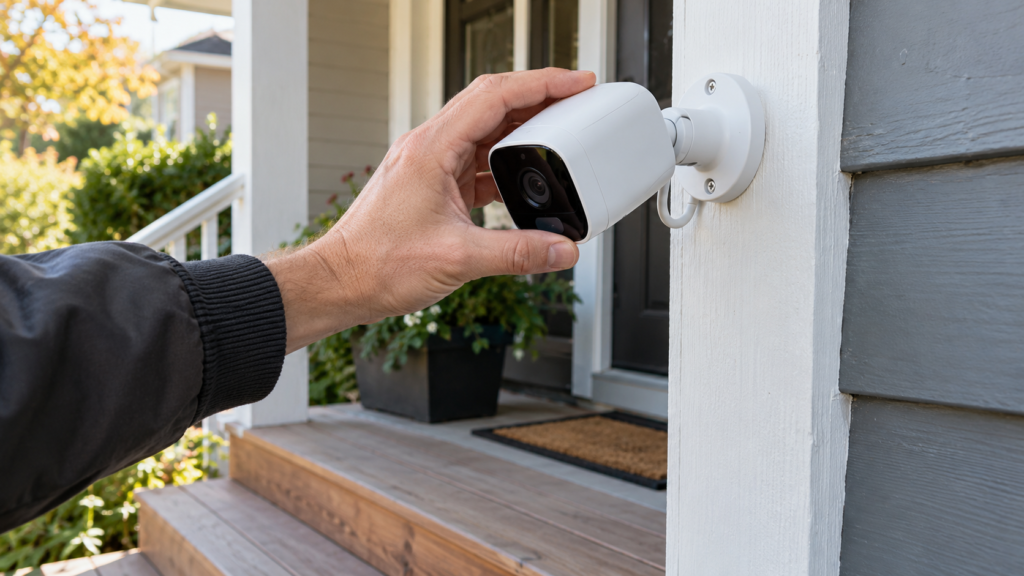
Likely fine: a doorbell camera aimed at your own front step that incidentally catches the sidewalk or a corner of a neighbour’s driveway. Worth a conversation: a camera angled specifically toward a shared fence line or side yard, even without clear malicious intent. Likely a real problem: a camera pointed directly at a neighbour’s window, backyard, or any space with a clear expectation of privacy — and doubly so if it’s picking up audio.
What to do if you think there's a problem
If you think a neighbour’s camera has crossed a line, talking to them directly and specifically is almost always the right first step — many placements are accidental rather than deliberate, and most people will adjust an angle once they understand the concern. If that doesn’t resolve it, document what the camera appears to capture (photos of its mounting angle are usually more useful than trying to obtain its footage), then put your concern in writing to the neighbour, check your municipal bylaws, and speak with a lawyer or a community mediation service. Privacy commissioners usually can’t act on a homeowner’s personal camera. If the camera looks into a bedroom or bathroom, or you feel threatened, contact the police.

Setting up a camera and want it placed the right way from day one?
Frequently asked questions
It depends on what’s actually in frame and which province you’re in. A camera that incidentally catches a shared property line is treated very differently from one clearly aimed at your private space.
Talk to them directly. Most placements causing concern are unintentional and get adjusted once raised — it’s usually faster and less adversarial than a formal complaint.
Yes, significantly. Audio recording without consent from someone not part of the conversation carries federal criminal exposure under Criminal Code s.184, on top of any provincial privacy question about the video.
Often yes, especially in BC, where camera installations affecting shared spaces may require strata council authorization.
There’s no automatic right to it. A lawyer can advise whether a written request, a demand letter or a small claims filing makes sense in your province.