
Security cameras · 7 min read · updated sep 2026
How to Spot an Unlicensed Security Camera Installer in Canada
By the Pixl Canada install team
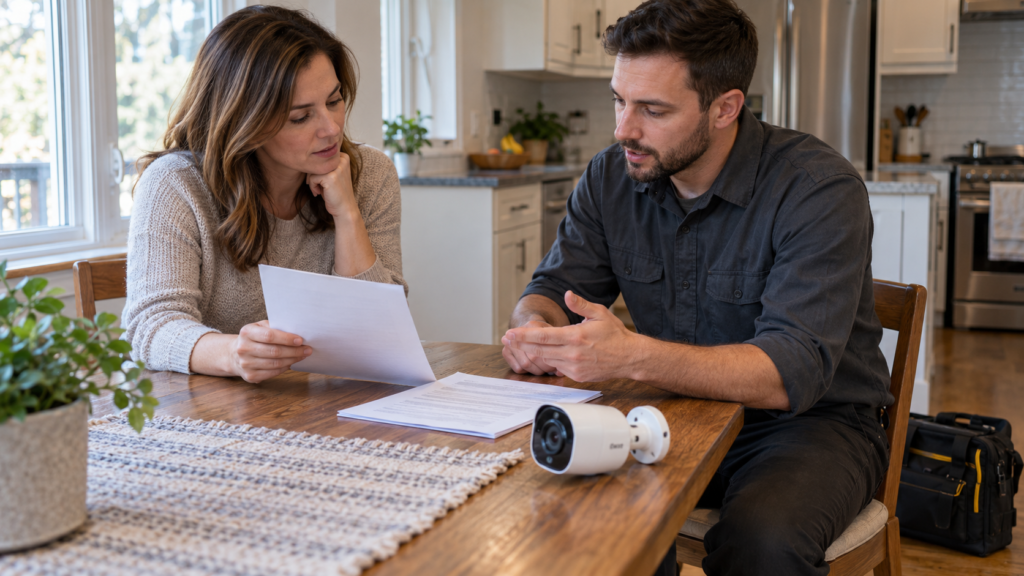
Quick answer
An unlicensed security camera installer usually can’t show a provincial licence where one is required, won’t give proof of insurance, quotes only verbally and asks for cash up front. Licensing depends on your province. British Columbia and Quebec license camera installers, while electrical work anywhere needs a licensed electrician.
Do security camera installers need a licence in Canada?
It depends on the province. There is no single national licence, and the rules range from strict to none at all for camera work itself.
Security licensing is set by each province. Here is what the official sources say for three of the biggest markets:
| Province | Licence for camera installers? | What the rules say |
|---|---|---|
| British Columbia | Yes | The Security Services Regulation lists “closed circuit television installer” as a licence type, covering selling, supplying, advising on, servicing or installing CCTV equipment. Workers and businesses both need licences. |
| Quebec | Yes | The Private Security Act covers installing, maintaining and repairing video surveillance, alarm and access control systems. The Bureau de la sécurité privée (BSP) issues the licences. |
| Ontario | No camera-specific licence | Ontario’s security licensing covers security guards, private investigators, agencies and in-house security employers. Any electrical work must be done by a Licensed Electrical Contractor. |
| Other provinces | Check locally | Rules vary. Contact your provincial security licensing office and electrical authority. |
So “unlicensed” means different things in different places. In BC or Quebec, a camera installer working without a security licence is breaking provincial law. In Ontario, the bigger licence risk is someone doing electrical work they aren’t licensed for.
Province-by-province: BC, Quebec and Ontario
Here is what to ask for in each province, based on the official rules.
British Columbia: the CCTV installer licence
In BC, installing security cameras for someone else is licensed security work. Both the individual technician and the business need a valid licence.
BC’s Security Services Regulation on BC Laws lists “closed circuit television installer” as its own licence type, alongside security alarm installer, locksmith and others. The regulation also exempts electricians who only provide wiring for alarm installations and don’t do other security work. If you’re hiring in BC, ask the installer for their security worker licence and the company’s security business licence.
Quebec: BSP licences for video surveillance
In Quebec, any business that installs or services video surveillance systems needs a licence from the Bureau de la sécurité privée, and so do its technicians.
Quebec’s Private Security Act on LégisQuébec lists “activities related to electronic security systems” as a regulated sector. That includes installing, maintaining and repairing video surveillance systems. The Bureau de la sécurité privée keeps a public register of licence holders, so you can check a company by name before you sign.
Ontario: no camera licence, but electrical rules apply
Ontario does not have a security licence for camera installers. The province’s Private Security and Investigative Services page on Ontario.ca covers guards, private investigators, agencies and in-house security employers.
What Ontario does regulate strictly is electrical work. According to the Electrical Safety Authority (ESA) guide to finding the right contractor, a Licensed Electrical Contractor is the only business you can hire to do electrical work in your home. Their 7-digit ECRA/ESA licence number should appear on their vehicle, business card and estimate. The ESA also says whoever does the work must file the notification. If a contractor asks you to file it yourself, treat that as a warning sign.
When do you need an electrical permit for cameras?
Most camera installs don’t need a permit, because PoE and WiFi cameras run on low voltage or plug into existing outlets. You need a licensed electrician and a permit when the job adds a new circuit, outlet or hardwired connection.
Examples that usually cross into electrical work:
- Adding a new outdoor outlet to power a camera or floodlight camera.
- Hardwiring a floodlight camera into a new junction box.
- Running a new circuit to a garage or shed for an NVR or switch.
Rules differ by province and city, so check with your local electrical authority before any new wiring. A good camera installer will tell you when a job needs an electrician rather than doing it anyway.
Licensed technicians, $5 million liability insurance and a free written quote. WiFi cameras start at $200 for 1 or 2.
Why proof of insurance matters
Insurance protects you if the installer damages your home or someone gets hurt on your property. Without it, you could be stuck with the bill.
Camera installs involve ladders, drilling through exterior walls and fishing cable through attics. A slip can crack siding, hit a pipe or damage a roof. Ask for a certificate of insurance showing general liability coverage and the policy dates. Pixl carries $5 million in general liability insurance, and any reputable company should share its proof without hesitation.
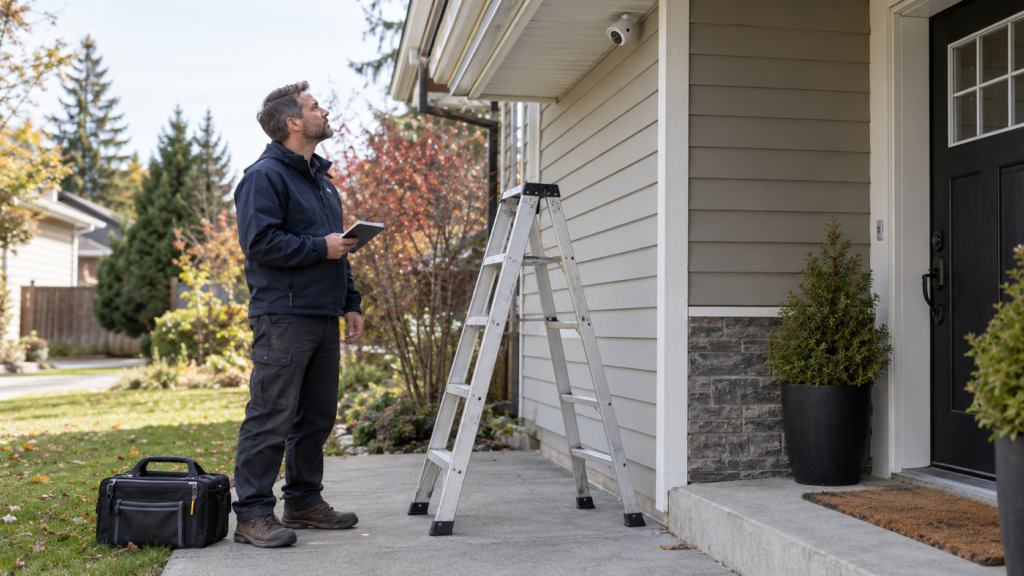
Red flags checklist
If you see two or more of these, keep looking.
- No business name, website or physical address, only a phone number.
- Can’t or won’t show a provincial security licence in BC or Quebec.
- Won’t provide proof of liability insurance.
- Quotes only by text or verbally, with no written breakdown.
- Asks for full payment or a large cash deposit before starting.
- Offers to “add an outlet” without being a licensed electrician.
- Asks you to pull the electrical permit or file the notification yourself.
- Uses default camera passwords or sets up the app on their own account.
- Price is far below every other quote with no clear reason.
- Pressures you to decide today.
Questions to ask before you hire
A few direct questions will sort good installers from risky ones in minutes.
- Does my province require a security licence for this work, and can I see yours?
- Can you send a certificate of liability insurance?
- Will any part of this job need new electrical work? Who does it?
- Can I get a written quote with equipment, labour and cable runs listed?
- Is the phone app set up on my account, with a new password?
- Where will the NVR or hub go, and how will cables enter the house?
- When do I pay, and what payment methods do you take?
A good written quote lists the number of cameras, camera models, recorder and storage, cable type, mounting locations, labour and taxes. It also says what happens if the job takes longer than planned.

DIY or hire a pro?
A single WiFi camera is a manageable DIY job. A multi-camera wired system is harder, and in some provinces paying someone to install it brings licensing rules into play.
DIY pros: you save on labour and choose your own timing. DIY cons: ladder work, drilling through exterior walls, sealing holes against weather, and aiming cameras so they don’t record your neighbour’s yard. See where a camera can legally point and whether audio recording is legal in Canada before you mount anything.
Pixl installs wired PoE/NVR systems and WiFi cameras, with phone app setup included. WiFi camera installation starts at $200 for 1 or 2 cameras, before tax. Wired systems are quoted for each property after we see the layout and cable routes, and the written quote is free.
Our licensed technicians carry $5 million in general liability insurance, and you pay after the job (card, e-transfer or cash).
Ready for a straight quote? Book a security camera installation with Pixl, see Pixl for businesses for commercial sites, or call or text (587) 899-7495.
Frequently asked questions
Do you need a licence to install security cameras in Ontario?
Ontario has no security licence specific to camera installers. Its security licensing covers guards, private investigators and agencies. Any new electrical work, such as adding an outlet, must be done by a Licensed Electrical Contractor.
Do you need a licence to install CCTV in BC?
Yes. BC’s Security Services Regulation lists closed circuit television installer as a licence type. The technician needs a security worker licence and the company needs a security business licence.
How do I check if a security installer is licensed?
Ask for the licence number, then confirm it with the provincial regulator. In Quebec, the BSP has a public register of licence holders. In Ontario, a licensed electrical contractor’s 7-digit ECRA/ESA number should appear on their vehicle, business card and estimate.
Do I need an electrician to install security cameras?
Not usually. PoE and WiFi cameras use low voltage or existing outlets. You need a licensed electrician if the job adds a new circuit, outlet or hardwired fixture.
What insurance should a camera installer have?
At minimum, general liability insurance that covers damage to your home and injuries on site. Ask for a certificate with the policy dates. Pixl carries $5 million in general liability coverage.
How much does security camera installation cost in Canada?
At Pixl, WiFi camera installation starts at $200 for 1 or 2 cameras, before tax. Wired CCTV systems with a recorder are quoted for each property, and the quote is free.
Related camera guides: security cameras at work and landlord and tenant camera rules. Written by the Pixl Canada install team: licensed technicians with $5 million liability insurance, installing TVs, security cameras, smart home devices and appliances across Canada.
Related articles